

While markets around the world are assuming peace in the Middle East is a done deal, the highly anticipated U.S.-led peace deal that promised to reopen vital global energy shipping lanes is hanging by a thread after sudden military flare-ups between Israel and Lebanon. If the war turns and becomes more violent again, your portfolio might skip a beat when reality hits. Back at home, Wall Street witnessed a historic, record-shattering $2.1 trillion public debut for SpaceX that minted Elon Musk as the world's first trillionaire, single-handedly breathing life back into a frozen IPO market. Yet, while billionaires celebrate and mega-cap stock models soar, everyday Americans are feeling the burn as the annual consumer price index hits its highest level since April 2023.
Subscribe for free to receive our FREE Retirement Calculator and Guide
A Fragile Peace: Middle East Strikes Threaten to Blow Up Landmark Iran Deal
A historic U.S.-led peace agreement designed to end the war with Iran and reopen the economically vital Strait of Hormuz is hanging by a thread. Just as a tentative memorandum of understanding was scheduled to be digitally signed, the Israel Defense Forces launched strikes on a Hezbollah command center in Beirut, responding to earlier aerial attacks from the Tehran-backed group in southern Lebanon. The sudden escalation has turned what was supposed to be a milestone Sunday for global diplomacy into a high-stakes waiting game, prompting a direct warning from President Donald Trump for all parties involved not to “blow it.”

Israel conducted a aerial attacks against different targets in southern Lebanon, jeopardizing a potential peace deal between Iran and the United States.
The “so what” for the global economy and your wallet hinges entirely on the opening of the Strait of Hormuz, a critical maritime chokepoint for the world’s energy supplies that this deal promises to unlock. If finalized, the agreement would dismantle Iran’s nuclear program and halt its funding of regional violence in exchange for unfreezing Iranian assets and easing economic sanctions. However, the latest exchange of fire has reignited doubts about whether a lasting ceasefire can actually hold, especially after a three-month conflict that has already seen direct U.S. strikes on Iranian targets and retaliatory missile barrages across the region.
Despite the chaos, top U.S. officials are publicly holding the line and insist the deal remains on track to be finalized. U.N. Ambassador Mike Waltz and Defense Secretary Pete Hegseth both expressed confidence that the agreement will still be signed, though they noted that long-term stability requires Iran to successfully rein in Hezbollah. On the other side, Iranian leadership is already using the Israeli strikes to question Washington’s ability to enforce its commitments, meaning investors and consumers alike will have to watch the region closely to see if diplomacy or another energy-disrupting escalation wins the day.
Subscribe for free to receive our FREE Retirement Calculator and Guide
To the Moon: SpaceX Shakes Wall Street with Historic $2 Trillion Debut
SpaceX has officially shattered the record books, closing its first day of public trading with a staggering market capitalization of $2.1 trillion. The rocket manufacturer’s highly anticipated Nasdaq debut instantly made it the sixth most-valuable company in the U.S. and officially minted founder Elon Musk as the world’s first trillionaire. It was a stunning milestone for a business that Musk admitted he originally gave “less than a 10% chance of succeeding” when he started it back in 2002 with a handful of employees.
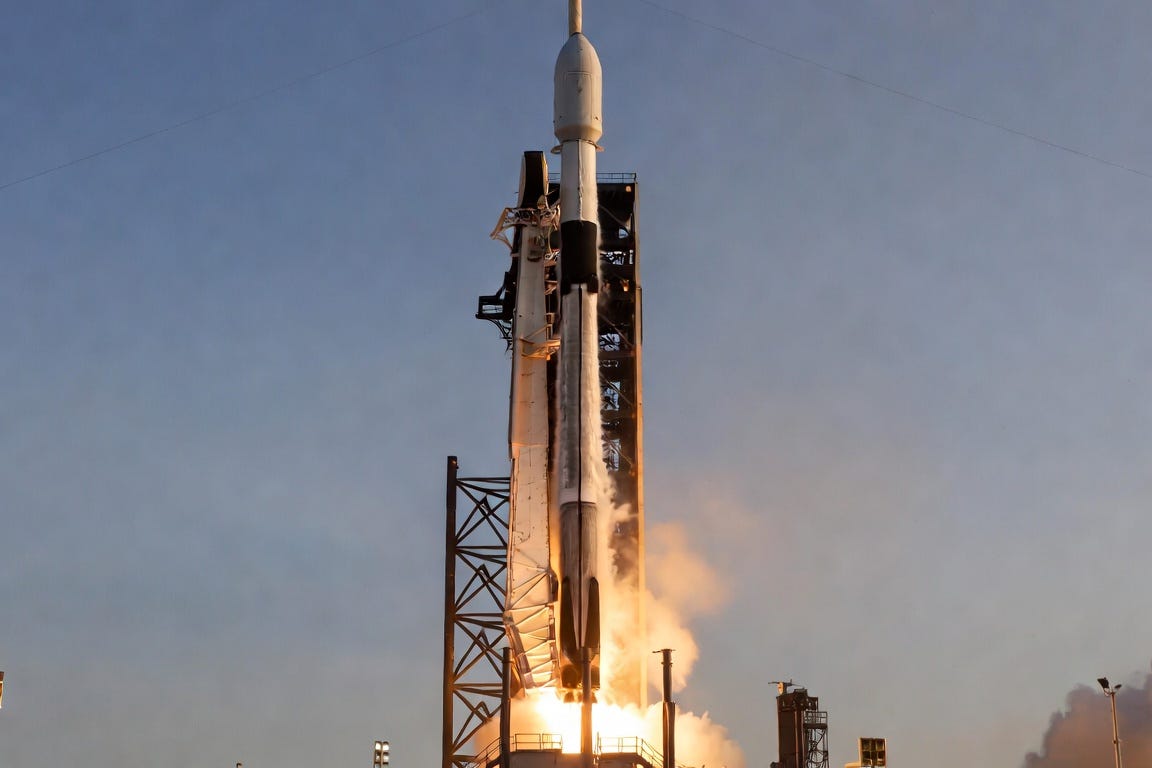
SpaceX became the 6th most valuable company in the U.S. on its stock market debut date.
The “so what” for your financial landscape is that this blockbuster deal has completely re-energized a stagnant IPO market that has been frozen since late 2021. By raising $75 billion—roughly triple the size of Alibaba’s previous 2014 record—and closing its first day up 19% from its offer price, SpaceX has cleared a massive runway for other mega-cap tech companies. Wall Street is already betting that this blowout success will fast-track highly anticipated public debuts later this year from private artificial intelligence giants OpenAI and Anthropic, both of which have already filed confidential paperwork.
However, critics warn that buying into the hype carries unique, highly concentrated risks. SpaceX went public at a nosebleed valuation of 112 times last year’s revenue, despite logging a heavy $4.9 billion loss in 2025 and relying on an unproven Starship rocket to make its cash-burning launch division profitable. Furthermore, because it is a founder-controlled giant where Musk commands over 82% of the voting power, public shareholders have zero ability to influence corporate governance, meaning ordinary investors are entirely at the mercy of one man’s vision and an astronomical growth strategy.
Subscribe for free to receive our FREE Retirement Calculator and Guide
The 14% Burger Tax: How Summer BBQ Inflation Is Grilling Your Budget
Hard-working Americans looking to fire up the grill are facing major sticker shock before they even light the charcoal. According to the newly released Wells Fargo summer BBQ food report, the average cost of hosting a standard backyard cookout for 10 people has climbed to $161, averaging about $16 per person. While total cookout expenses have edged up a modest 2.4% year-over-year, the real pricing pain is concentrated on the meat tray, where the cost of quintessential American hamburger beef has skyrocketed by a massive 14%.

Consumers are feeling the burn of high grocery and high gas prices going into this year’s summer season.
This localized grilling spike falls perfectly in line with a broader, more stubborn macroeconomic trend. The May consumer price index (CPI)—which measures everyday essentials like rent, gas, and groceries—jumped 0.5% for the month and is up 4.2% from a year earlier, marking the highest annual inflation reading since April 2023. This widespread pressure means that the days of cheap grocery store shortcuts are officially over, as major retailers successfully maintain their profit margins by passing higher labor, packaging, and energy costs directly on to the consumer.
If you want to protect your budget without canceling your summer plans, the data shows you have to pivot your menu strategy away from convenience and beef. Industry experts note that buying pre-cooked or pre-cut items adds hefty premiums—like a $7 surcharge for a veggie tray or an extra $4 per pound for pre-packaged ribs—so making sides like potato salad from scratch is an instant money-saver. Budget-conscious hosts can build an inflation-busting menu by swapping out costly beef for chicken or pork (which rose just 3%) or loading up on items that have actually dropped in price like eggs (down 14%) and fresh berries (down 3%).
Subscribe for free to receive our FREE Retirement Calculator and Guide
Follow along on social media for key updates:
Instagram: TheMarketDispatch
Disclaimer:
The information provided by The Market Dispatch is for educational and informational purposes only and should not be construed as financial, legal, or investment advice.
The Market Dispatch, its authors, and contributors are not financial advisors, brokers, or attorneys. Any opinions, analyses, or projections expressed are solely those of the authors and do not constitute specific recommendations for any individual.
Investing involves risk, including the potential loss of principal and capital. Past performance does not guarantee future results. Before making any financial decisions or investments, you should consult with a qualified financial advisor or other professional who understands your personal circumstances.
By reading this newsletter or using any related materials, you acknowledge and agree that The Market Dispatch and its team will not be held liable for any loss, damage, or expense incurred as a result of reliance on the information provided.
Strong piece.
This is worth reading because it captures the risk most investors are tempted to ignore right now: markets are behaving as if the Middle East peace outcome is already secured, but the facts still look fragile.
The Hormuz angle is the real portfolio risk. If the framework holds, oil can keep easing, CPI pressure cools, yields breathe, and risk assets get room. If it breaks, the market may have to reprice energy, inflation, rates, and long-duration growth stocks very quickly.
The SpaceX section is also a useful sentiment check. A $2T-plus public debut, record IPO demand, and first-day strength tell us liquidity appetite is back. But valuation is doing a lot of work here. With roughly $18.7B of 2025 revenue and a $4.9B loss, this is not a normal earnings story. It is a future-dominance story.
Great work overall. The line underneath the whole piece is simple: when markets become certain, risk often hides in the assumptions.
People should check this one out.
Sehr gut geschriebener Artikeln vielen dank für deine Arbeit.