

If you’ve spent any time on the internet lately, you’ve probably seen the “Doomsday” headlines. There’s a lot of anxiety floating around about Artificial Intelligence coming for our paychecks.
Earlier this year, the heavy hitters at Goldman Sachs dropped a bombshell prediction: AI could impact roughly 300 million jobs globally. That’s not a small number—that’s a tectonic shift. We’re already seeing it in the wild, too. Big names like IBM have openly paused hiring for roles they think a computer can handle, and academic experts like Daron Acemoglu are sounding the alarm that this isn’t just a “phase.”
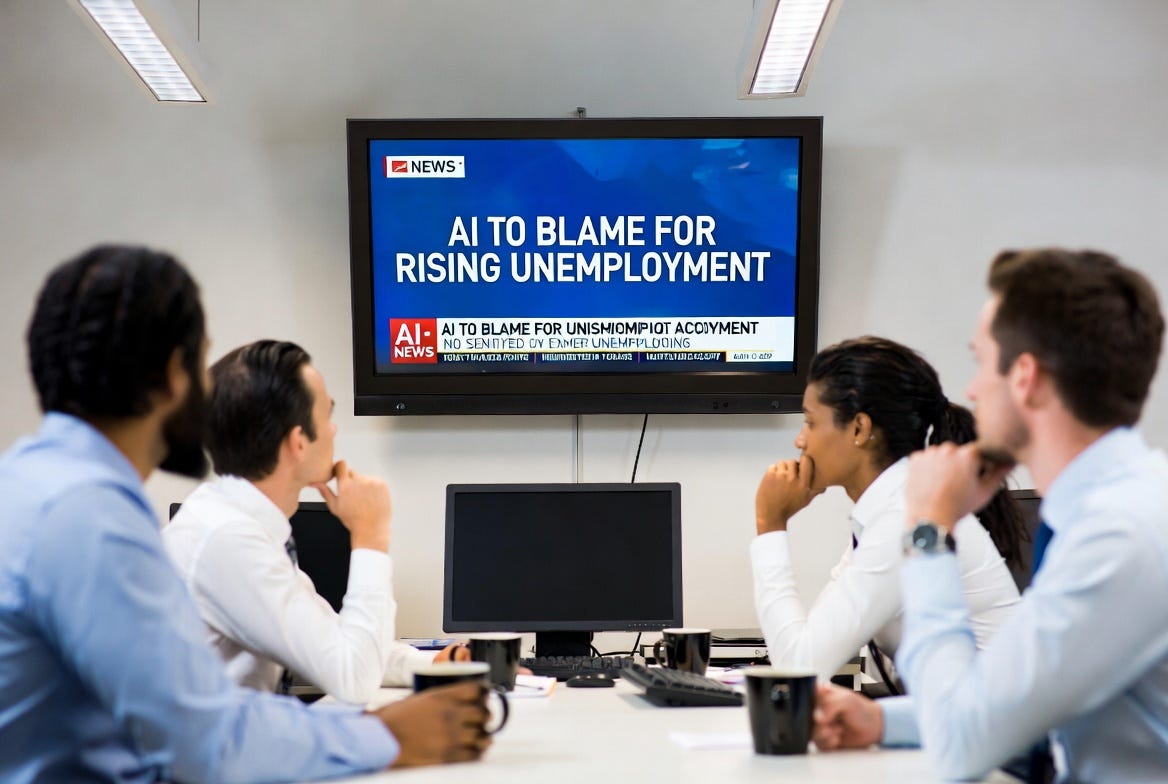
Naturally, this has people looking over their shoulders. Recent polling shows that one in five college-educated workers is genuinely worried that their degree might be outpaced by an algorithm.
But before we all start practicing our “Will work for electricity” signs, let’s take a breath and look at some history. Our friends over at Morgan Stanley recently dug into the archives to compare the AI boom to the tech revolutions of the past. Their conclusion? It’s actually a pretty hopeful story.
Subscribe for free to receive our FREE Retirement Calculator and Guide
The Great Spreadsheet “Scare” of 1987
Think back to the late 1970s and 80s. Before Microsoft Excel became the king of the office, “bookkeeping” was a grueling, manual labor of love involving paper ledgers and pencils. When digital spreadsheets arrived, everyone assumed the accounting industry was headed for the scrap heap.
Here is what actually happened between 1987 and 2000:
The Decline: The number of Americans working as bookkeepers or clerks dropped from 2 million to 1.5 million.
The Explosion: In that same window, the number of actual accountants rose from 1.3 million to 1.5 million.
The “New” Jobs: Even more impressive, the number of management analysts and financial managers surged from 600,000 to 1.5 million.

Workers were much less productive before the invention of computers, which made them much more valuable as their productivity increased
In plain English: The software didn’t kill the industry; it just automated the “grunt work,” which freed up humans to do higher-level thinking. We traded data entry for data analysis.
Subscribe for free to receive our FREE Retirement Calculator and Guide
The ATM Paradox
We saw the exact same thing with the ATM. When those machines first started popping up on street corners, people predicted the death of the bank teller. But something funny happened. Because ATMs made it cheaper for banks to operate individual branches, they started opening more branches.

And who do you need to staff those branches? More tellers. The job changed from “counting $20 bills” to “helping customers with loans and credit cards,” but the headcount actually went up.
The Productivity Playbook
The pattern is clear: Technological innovation usually leads to increased productivity and lower prices. When things get cheaper and more efficient, it creates room for entirely new products and services that we couldn’t even imagine ten years ago.
The Reality Check: While the “macro” picture looks good, the “micro” picture can be tough. If you are the bookkeeper who gets replaced by a program, it’s cold comfort to hear that there are plenty of new jobs for “Financial Managers” if you don’t have the training for that role.
The Bottom Line
We aren’t looking at a “jobless” future, but we are looking at a “different-job” future. The real challenge of the AI era isn’t going to be a lack of work—it’s going to be the massive demand for reskilling.
As Morgan Stanley points out, we’re going to need a serious, coordinated effort between the government and the private sector to help workers level up. The tools are getting smarter, which means we have to get smarter at using them.
History shows us that the “robots” aren’t here to take our place; they’re here to take the boring parts of our jobs so we can do something more interesting. We just have to make sure everyone has a map for the transition.
Subscribe for free to receive our FREE Retirement Calculator and Guide
Disclaimer:
The information provided by The Market Dispatch is for educational and informational purposes only and should not be construed as financial, legal, or investment advice.
The Market Dispatch, its authors, and contributors are not financial advisors, brokers, or attorneys. Any opinions, analyses, or projections expressed are solely those of the authors and do not constitute specific recommendations for any individual.
Investing involves risk, including the potential loss of principal and capital. Past performance does not guarantee future results. Before making any financial decisions or investments, you should consult with a qualified financial advisor or other professional who understands your personal circumstances.
By reading this newsletter or using any related materials, you acknowledge and agree that The Market Dispatch and its team will not be held liable for any loss, damage, or expense incurred as a result of reliance on the information provided.
AI can’t sh!t post comments the way I do so no chance pal
Hope so but we haven’t hit your optimistic jobs scenario yet, with university graduates 🎓 struggling to find jobs in the UK 🇬🇧