

The S&P 500 is only a few percentage points below record territory, yet the recent selloff in semiconductors and other high-flying artificial-intelligence names has unsettled a lot of investors. The list of potential obstacles is not short: Treasury yields are still near levels not seen in decades even after this week’s rally took the 10-year back under 5%, the war in Iran continues, and crude oil has climbed back to prices last observed in May. Meta’s latest earnings did little to reassure markets that the enormous sums being spent on AI infrastructure will generate adequate returns. With Anthropic expected to come public soon, some worry that a large new equity offering could absorb demand that would otherwise support existing shares.
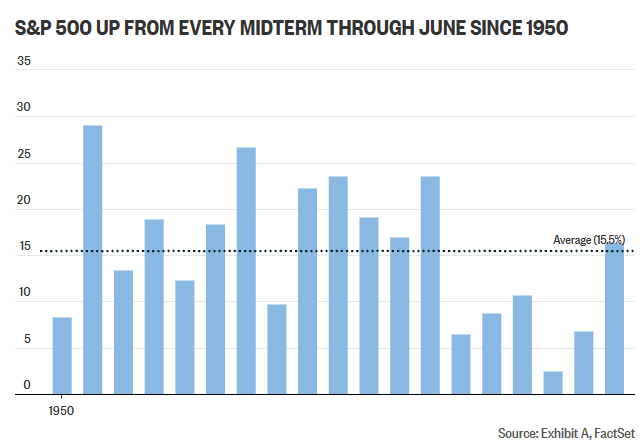
The S&P 500 has gone up significantly after every Midterm Election cycle, going all the way back to 1950 (Chart Source: MarketWatch)
Against that backdrop, a long-standing seasonal pattern is getting attention. Since 1950, the S&P 500 has risen by an average of 15.5% between Election Day and June 30 of the following year, according to Matt Cerminaro, founder of Exhibit A, a content platform for financial advisers. The figure does not depend on which party wins the midterms. Cerminaro’s summary of the implication is direct: “The best midterm strategy is to turn off the TV and set a buy order for Election Day.”
The third year of the cycle
Sam Stovall, chief investment strategist at CFRA Research, notes that the third year of a presidential term has historically been the strongest stretch of the four-year cycle.
