

Just when it felt like inflation was ready to spiral out of control, the latest data brought a surprise cooling trend. But while wholesale prices are easing, the path forward is anything but simple. Between a Treasury Secretary hitting the brakes on rate cuts and a high-stakes maritime blockade in the Middle East, the global economy is in a massive tug-of-war. This week, we’re looking at why the numbers aren’t telling the whole story and what the newest shift in oil demand means for your bottom line.
Subscribe for free to receive our FREE Retirement Calculator and Guide
Wholesale prices rose 0.5% in March, much lower than economists expected
Wholesale prices are cooling down faster than anyone expected. Despite the chaos in the Middle East, the Producer Price Index (PPI) rose just 0.5% in March—way below the 1.1% analysts were bracing for. Even better, “core” inflation (which ignores the roller coaster of food and energy costs) barely moved, ticking up only 0.1%.
Gasoline and diesel prices are still the main culprits, with diesel alone soaring 42% last month. However, there’s a light at the end of the tunnel. Thanks to a recent ceasefire in Iran, crude oil prices have already dropped about 15% in the past week. Business owners also seem to be absorbing tariff costs rather than passing them all onto consumers, which is keeping the “services” side of the economy surprisingly stable.

Shopper are hoping for lower prices as inflation subsides and prices stabilize
What does this mean for your wallet? For now, the Federal Reserve is likely to keep interest rates right where they are. While annual inflation is still higher than the 2% target, the underlying data looks much less scary than the headlines suggest. If the peace holds and energy costs keep sliding, the “inflation burst” many feared might turn out to be a dud.
Rate Cuts on Ice: Why the Fed is Hitting the Brakes
Treasury Secretary Scott Bessent is sounding less dovish than previously. After months of calling for the Federal Reserve to slash interest rates to supercharge the economy, he’s now saying it’s okay to “wait and see.” This is a major pivot his previous stance where he called for interest rate cuts as a key ingredient missing for stronger growth.
So, what changed? The war in Iran. With oil prices recently surging past $100 a barrel, the Fed is stuck in a tough spot. They have to balance rising energy costs against a slowing economy. Lowering rates too soon could pour gasoline on the inflation fire, so the central bank is likely to hold steady for the foreseeable future.

Lower mortgage rates could provide some much needed relief to borrowers if interest rates go down
Adding to the uncertainty is a leadership shakeup at the Fed. Chair Jerome Powell’s term is up in May, but his potential replacement is currently stalled in the Senate due to political infighting. Between geopolitical conflict and D.C. gridlock, the era of cheap borrowing might be officially on the back burner.
Subscribe for free to receive our FREE Retirement Calculator and Guide
The Oil Tug-of-War: Blockades vs. Breakthroughs
Oil prices are finally sliding back toward $95 a barrel, but it’s not exactly a victory for consumers. The International Energy Agency (IEA) just warned that “demand destruction” is setting in—meaning prices have gotten so high that people and businesses are simply being forced to stop using fuel. It’s the sharpest drop in global consumption we’ve seen since the height of the pandemic.
This cooling comes as the U.S. shifts its strategy. Following a failed weekend summit, the military has officially started a “blockade” of Iranian ports. While this puts a stranglehold on Tehran’s oil exports, Vice President JD Vance says the door for peace is still cracked open. He’s made it clear that “the ball is in Iran’s court,” with rumors swirling that talks could even resume later this week.
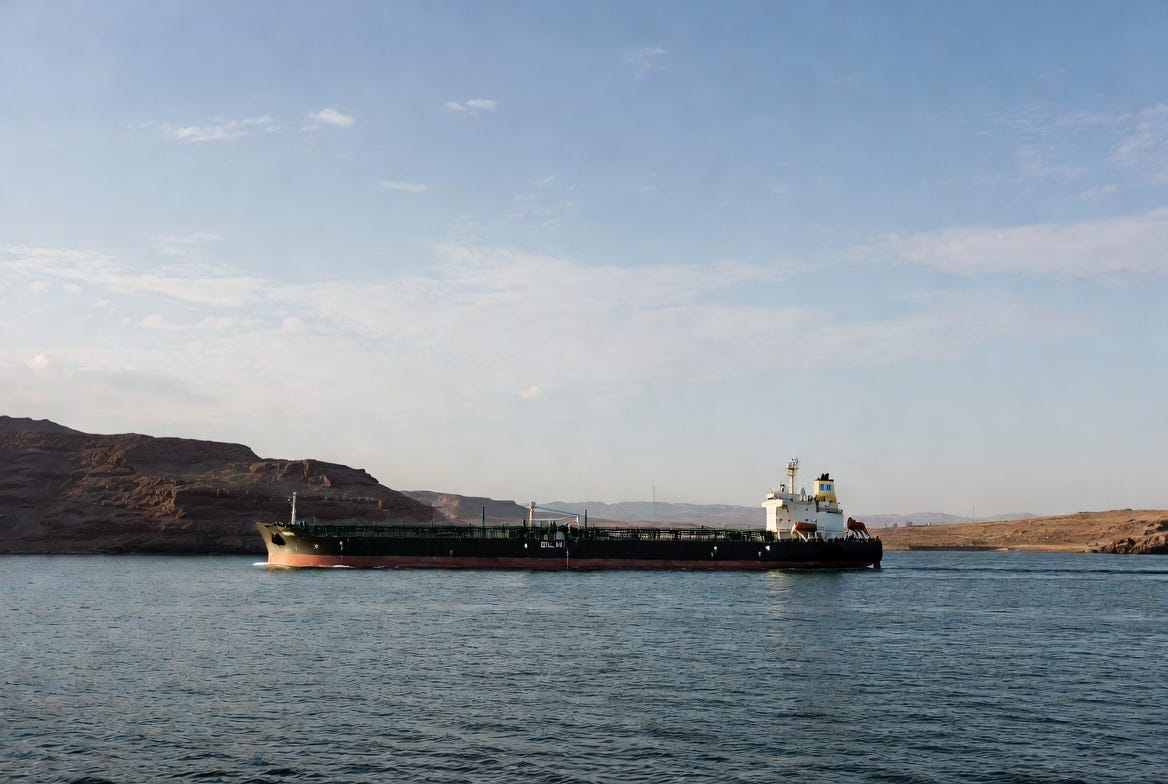
Oil tankers won’t be allowed into our out of Iranian ports due to the current U.S. blockade
What’s the bottom line? While the blockade makes physical oil harder to find, the market is betting that a diplomatic deal is still possible. For your wallet, expect a tug-of-war: the IEA says fuel will stay scarce, but if those Islamabad talks actually get back on track, the “fear premium” driving up your gas bill could finally start to evaporate.
Subscribe for free to receive our FREE Retirement Calculator and Guide
Disclaimer:
The information provided by The Market Dispatch is for educational and informational purposes only and should not be construed as financial, legal, or investment advice.
The Market Dispatch, its authors, and contributors are not financial advisors, brokers, or attorneys. Any opinions, analyses, or projections expressed are solely those of the authors and do not constitute specific recommendations for any individual.
Investing involves risk, including the potential loss of principal and capital. Past performance does not guarantee future results. Before making any financial decisions or investments, you should consult with a qualified financial advisor or other professional who understands your personal circumstances.
By reading this newsletter or using any related materials, you acknowledge and agree that The Market Dispatch and its team will not be held liable for any loss, damage, or expense incurred as a result of reliance on the information provided.
Cooling PPI while the oil supply shock is still live is the exact stagflation-lite setup that traps the Fed. Wholesale deflation hitting the pump is real demand destruction — but if the Strait situation escalates again, that relief gets unwound fast. The bond market is pricing a stalled Fed, but Bitcoin's behavior is the tell: it sold off on the initial Strait news, then recovered when peace talks resumed. That correlation shows crypto traders are treating the Iran situation as a liquidity signal, not just a risk-off event. If real rates turn negative before the Fed cuts, the demand destruction narrative for oil and the Bitcoin regime shift narrative converge simultaneously. What's your base case on the Fed's next move?
I have a piece on this exact topic coming out on Thursday (Episode 18)…