

It’s been a weekend of high-stakes deadlines and historic milestones. While semiconductor stocks are hitting growth levels we haven't seen since the peak of the dot-com era, the physical world is proving just as volatile. From a breakthrough gas shipment finally moving through the Strait of Hormuz to a new July 4th ultimatum for European trade, the landscape for your money is shifting in real-time. This week, we are breaking down why the AI rally has even the "Big Short" investors worried and what the latest diplomatic "cracks" in the Iranian blockade mean for your energy bills. Here is our take on what’s actually happening with your money.
Subscribe for free to receive our FREE Retirement Calculator and Guide
The Semiconductor Surge: Are we Reliving the Year 2000?
Semiconductor stocks are on an absolute tear right now, and if the growth feels familiar, it’s because we haven’t seen a run like this in a quarter-century. The PHLX Semiconductor Index has surged over 50% in just the last 25 trading days, a milestone it hasn’t hit since March 9, 2000. For those who remember the original tech boom, that was the exact day before the dot-com bubble hit its peak and sent the markets into a three-year tailspin. It’s a staggering rally that has moved well beyond just Nvidia, as even long-time laggards like Intel and Qualcomm are suddenly leaping higher.
The fuel behind this fire is the massive infrastructure buildout for artificial intelligence. Wall Street is hiking profit forecasts because supply bottlenecks for critical components are making chips more valuable, and strong earnings from the start of the year have only made investors more aggressive. It’s no longer just about the high-end processors used to train AI; analysts are seeing massive potential in everything from memory chips to basic designs. This “rising tide lifts all boats” mentality has pushed every single stock in the index up by at least 14% over the past month, with some names doubling in value in a matter of weeks.

The rapid rise in tech valuations we have experienced over the past year reminds some Wall Street veterans of the Dot-Com Bubble from the early 2000’s.
But while the gains look great on paper, some market veterans are sounding the alarm that this party is getting too crowded. Michael Burry, the investor famous for “The Big Short,” has already started betting against the sector with options that expire in 2027, and other strategists warn that the rally is looking dangerously overextended. For the rest of us, the takeaway is a mix of opportunity and caution: while the AI revolution is driving real profit, the historical parallels to the dot-com crash suggest that when a market moves this far this fast, the eventual correction can be a long, painful road to recovery.
Cracks in the Blockade: A Qatari Tanker and a Message from Tehran
After weeks of a choked-off Strait of Hormuz, we’re finally seeing a sliver of diplomatic movement. Iran has reportedly sent its response to a U.S.-led peace proposal through mediators in Pakistan, focusing on a path to end the war and secure the vital shipping lanes. While the Trump administration is still waiting to officially review the details, the timing is critical as the President prepares for a high-stakes visit to China this week. Negotiations are apparently moving at a snail’s pace, partly because Iran’s new leadership is reportedly in hiding after being injured, leaving the U.S. to navigate a fractured and difficult chain of command.
Despite the slow talk, the physical blockade actually flickered open on Sunday for a brief moment of relief. For the first time since the war began in late February, a Qatari natural gas tanker successfully crossed the Strait to deliver fuel to Pakistan, which has been struggling with massive power blackouts. This wasn’t a military breakthrough but rather a “confidence-building” gesture by Iran toward the mediating countries. Seeing a massive LNG carrier move through those waters is a significant symbolic win for global energy stability, even if the ship had to follow a specific route dictated by Iran’s armed forces.

A Natural Gas carrier was able to transit through the Strait of Hormuz this weekend, in a possible signs that hostilities are slowing down.
However, you shouldn’t start celebrating a return to normal just yet. While that one ship got through, the region remains a hornets’ nest of drone activity, with the UAE and Kuwait intercepting “hostile” flights just this past weekend. Iran is even drafting a law to formalize its management of the Strait, which would explicitly forbid passage to vessels from “hostile states.” For those of us watching the pump, this means gasoline prices will likely stay elevated; as long as the world’s most important energy chokepoint is being used as a political “pressure tool,” the global energy crisis is far from over.
Subscribe for free to receive our FREE Retirement Calculator and Guide
A July 4th Ultimatum: Trump’s New Trade Deadline for Europe
President Trump has officially put the European Union on notice, setting a firm deadline of July 4—our nation’s 250th birthday—to ratify the trade deal originally hammered out in Scotland last year. The stakes are high: if the EU doesn’t follow through on its promise to slash tariffs to zero, Trump is threatening to hike import taxes to “much higher” levels. While he’s previously floated a 25% tax on European cars and trucks, this latest ultimatum suggests he might be willing to go even further across the board if Brussels doesn’t move faster.
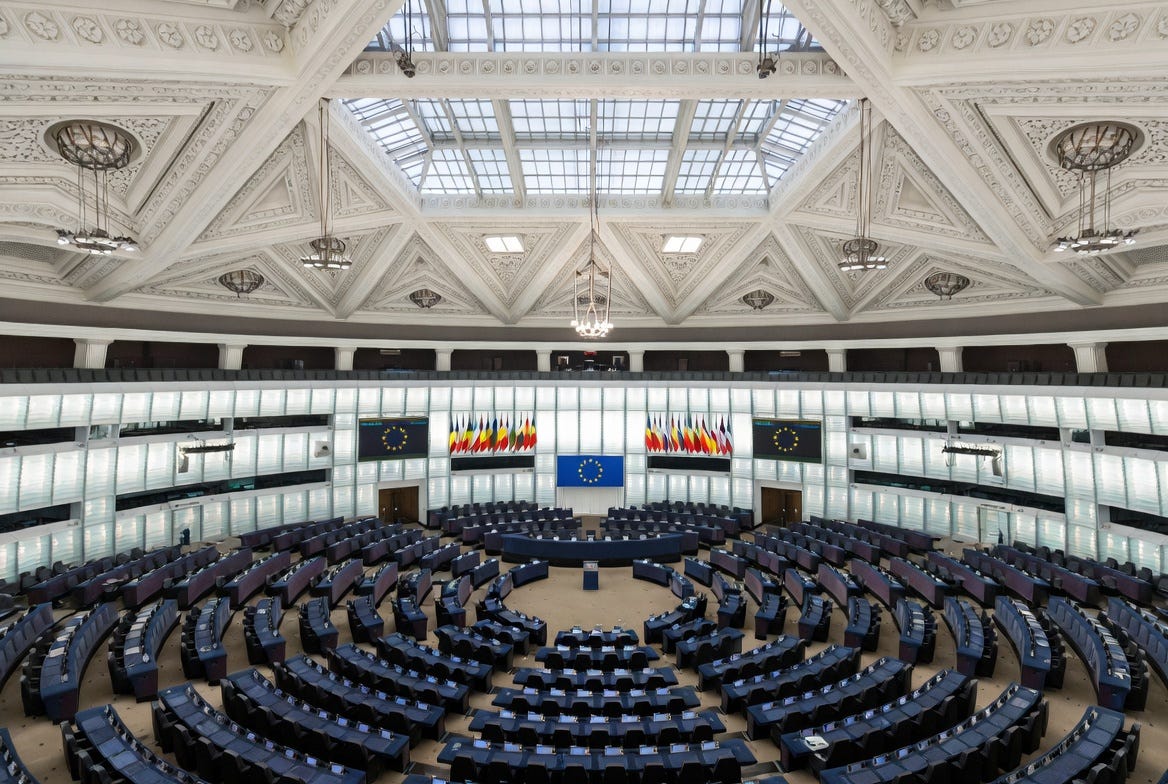
Markets are looking for the European Union parliament to approve a trade deal package conducive to ending the on-going trade stalemate between EU and the US.
Despite the tough talk, both sides are signaling that a deal is still the goal. European Commission President Ursula von der Leyen described recent talks as having made “good progress,” and negotiators are heading back to the table today to iron out the remaining wrinkles. The core of the dispute is a disagreement over whether the EU is living up to its end of the bargain to eliminate levies on American goods. It’s a classic high-pressure negotiation tactic, but with the deadline just a couple of months away, the clock is ticking for businesses that rely on smooth trade across the Atlantic.
For the rest of us, this trade spat has a direct line to our bank accounts. If these “much higher” tariffs actually go into effect, the price of everything from German cars to Italian luxury goods could see a sudden spike at a time when we’re already dealing with a messy global economy. However, Trump’s trade agenda did hit a speed bump recently, as a U.S. trade court ruled that his latest 10% global tariffs weren’t legally justified. This legal pushback adds a layer of uncertainty to the threat—but as we’ve seen before, the threat itself is often enough to keep the markets and the consumer on edge.
Subscribe for free to receive our FREE Retirement Calculator and Guide
Disclaimer:
The information provided by The Market Dispatch is for educational and informational purposes only and should not be construed as financial, legal, or investment advice.
The Market Dispatch, its authors, and contributors are not financial advisors, brokers, or attorneys. Any opinions, analyses, or projections expressed are solely those of the authors and do not constitute specific recommendations for any individual.
Investing involves risk, including the potential loss of principal and capital. Past performance does not guarantee future results. Before making any financial decisions or investments, you should consult with a qualified financial advisor or other professional who understands your personal circumstances.
By reading this newsletter or using any related materials, you acknowledge and agree that The Market Dispatch and its team will not be held liable for any loss, damage, or expense incurred as a result of reliance on the information provided.
I don't like trying to predict market peaks, but this certainly feels like an inflection point. But: “Markets can remain irrational longer than you can remain solvent.” - John Maynard Keynes
So I'll just continue to dollar cost average into my index funds and durable companies and take the long view.
The March 9, 2000 data point is the most specific and testable historical parallel Ive seen in any tech bubble analysis this year. PHLX SOX surging 50% in 25 trading days has happened exactly twice in the indexs history. The first time was the literal day before the dot-com peak. We're living through the second time right now.
The question that determines wether this is a genuine echo or a misleading pattern is what drove the semiconductor demand in each case. In 2000, chip demand was being pulled forward by enterprise IT spending on Y2K remediation followed by the telecom buildout. When the pull-forward exhausted itself the demand cliff arrived overnight because the spending had been borrowed from the future rather than generated organicaly.
The AI semiconductor demand has a different structure but its not immune to the same dynamic. $725 billion in hyperscaler capex is being committed for 2026 based on revenue growth projections that assume AI adoption continues accelerating. If those projections prove even 20% optimistic the capex gets revised downward and the chip orders that drove the 50% surge in SOX get cancelled or deferred. The chips are real. The demand is real. The question is wether the demand has been pulled forward from 2027-2028 into 2026 the way telecom demand was pulled forward into 1999-2000.
Burry taking short positions with 2027 expiry is the timing signal that deserves attention. Hes not betting the crash happens tomorrow. Hes betting the demand pull-forward becomes visible in earnings revisions within 18 months, which is consistent with the historical lag between peak semiconductor ordering and the moment the market realises the orders represented a cycle peak rather than a new permanent baseline.
The "rising tide lifts all boats" observation is the part that should concern index investors most. When every stock in a semiconductor index rises at least 14% in a month regardless of individual fundamentals, the market is pricing the sector as a single trade rather than as individual companies. Thats exactly how corrections propagate fastest because when the sector trades as one position, it sells as one position.