

SpaceX completely stole the spotlight with an unprecedented public debut, ballooning to a $2.66 trillion valuation and using its massive stock currency to engineer a staggering $60 billion artificial intelligence merger. Yet, while tech investors celebrate, the broader macroeconomic landscape is fracturing. A multi-year gold rush came to a screeching halt this week as soaring Treasury yields dragged the precious metal into a brutal bear market at its fastest pace since the 2008 financial crisis. To top it off, newly minted Federal Reserve Chairman Kevin Warsh just fundamentally rewrote the central bank's playbook, introducing a cloud of secrecy that sent shockwaves through the bond market.
Subscribe for free to receive our FREE Retirement Calculator and Guide
Astronomical Appetite: SpaceX Defies Reality with Massive Volume and a $60 Billion AI Bet
The mind-boggling financial movement surrounding SpaceX has completely hijacked Wall Street following its historic public debut. In its first three days of trading alone, the rocket manufacturer averaged a staggering $66 billion in daily dollar volume—soundly beating out heavily traded market staples like the S&P 500 ETF (SPY) and tech giants like Nvidia. The massive influx of capital pushed SpaceX’s market cap to a blistering $2.66 trillion, briefly leapfrogging Amazon and Microsoft despite a glaring reality check: Amazon pulls in more revenue in a single week than SpaceX generates in an entire year, and SpaceX continues to lose billions annually.

SpaceX valuations have been going “to the moon” since its Stock Market debut.
Elon Musk is using his newly minted $1 trillion personal net worth and the company’s high-flying stock to aggressively dominate the next wave of tech infrastructure. Within days of going public, SpaceX locked in a formal $60 billion stock acquisition of AI-coding startup Cursor, placing it among the largest tech deals in history alongside milestones like Broadcom’s purchase of VMware. By folding heavy-hitting artificial intelligence into a business that already merged with xAI at a $1.25 trillion valuation, SpaceX is signaling that it intends to be an AI and aerospace monopoly, forcing the rest of the market to react to its sheer gravitational pull.
However, ordinary investors need to look past the hype to see the severe risks baked into this historic run. The sheer size of the IPO—which raised $75 billion initially plus another $10.7 billion from underwriters—has drawn sharp criticism from progressive politicians pointing to extreme wealth inequality while average Americans battle rising inflation. More importantly for your wallet, large institutional investors are already sounding the alarm on weak corporate governance standards, noting that Musk retains an ironclad 82% voting control. With valuations completely detached from fundamental financial realities, buying in means trusting Musk’s absolute control over a cash-burning machine.
Subscribe for free to receive our FREE Retirement Calculator and Guide
Safe Haven Shakeup: Gold Plunges into a Bear Market as Treasury Yields Soar
Gold has officially broken its multi-year winning streak, tumbling 20% from its March peak to enter a formal bear market for the first time since 2022. The precious metal settled at $4,133.30 an ounce, marking its lowest finish since November 2025. This aggressive 91-day slide represents the fastest descent into a bear market that Wall Street has witnessed since the height of the 2008 financial crisis. Surprisingly, the traditional safe haven has completely failed to find a floor despite mounting geopolitical panic, which escalated after President Donald Trump announced plans for further U.S. action against Iran.
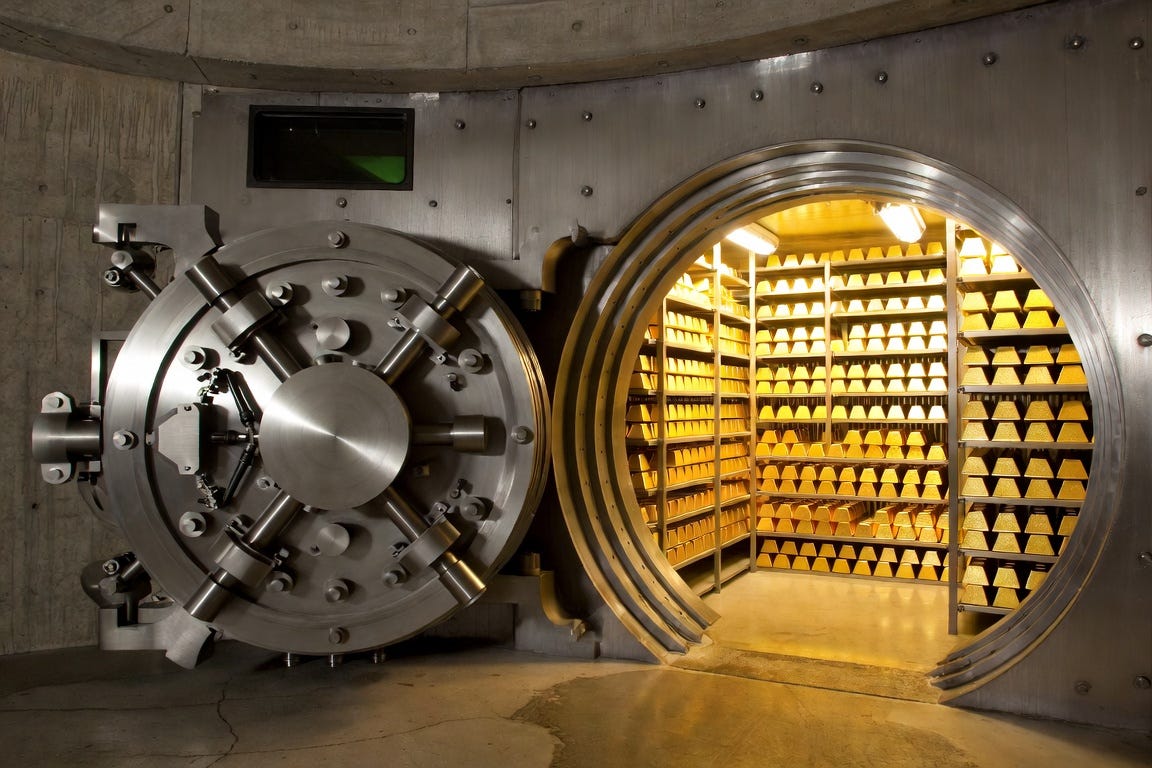
The recent drop in gold prices puts into question whether the precious metal is actually an effective “safe heaven’ in cases of stock market downturns
The “so what” for your personal finances comes down to a harsh reality check on interest rates and inflation. The annual U.S. inflation rate climbed to 4.2% in May, completely erasing hopes for a Federal Reserve rate cut and prompting investors to brace for an actual rate hike this year. Because ongoing Middle East tensions are keeping oil prices high, traders are abandoning non-yielding assets like gold and racing to park their cash in risk-free government debt. With the 10-year Treasury note climbing to 4.535% and the 30-year bond hitting a lucrative 5.016%, the opportunity cost of holding gold has simply become too steep for big money to ignore.
For your portfolio strategy, this sell-off reveals that gold has abandoned its traditional role and is currently moving in lockstep with the rest of the stock market. Since early June, gold and the Nasdaq have maintained an incredibly tight 0.91 correlation coefficient, meaning they move together as broader equity markets rise or fall. While some market historians note this looks like 2008—when gold initially crashed alongside stocks before bottoming out and embarking on a massive long-term rally—wealth managers emphasize that gold still serves as vital “catastrophe insurance.” For long-term investors looking to put cash to work, top market strategists are viewing this steep correction as a rare buying opportunity to accumulate precious metals at a heavy discount before the macroeconomic landscape shifts again.
Subscribe for free to receive our FREE Retirement Calculator and Guide
The New Fed Playbook: Chairman Warsh Silences the Markets and Braces for Volatility
Federal Reserve Chairman Kevin Warsh has officially launched a quiet revolution at the central bank, using his first press conference to declare that “inflation is a choice” and pledging a new chapter of secrecy and humility. While the Federal Open Market Committee unanimously voted to hold interest rates steady at 3.5% to 3.75%, Warsh took the unprecedented step of withholding his own economic forecast from the Fed’s famed “dot plot.” By keeping his personal interest rate outlook a secret, Warsh is deliberately stripping the public of forward guidance and forcing the market to react to a much quieter, less predictable central bank.
The era of smooth, highly telegraphed interest rate decisions is over, and investors are already pricing in a bumpier ride. Immediately following Warsh’s remarks, the two-year Treasury yield surged by 16 basis points—a massive single-day move indicating that Wall Street bets the Chairman will ultimately have to raise interest rates to back up his aggressive anti-inflation stance. For everyday consumers and borrowers, this structural shift means a new era of market volatility is here, which could rapidly translate into higher borrowing costs for mortgages, credit, and car loans if bonds continue to price in a more hawkish Fed.

The Fed’s decisions influence many loan rates, from mortgages to credit cards.
To push through his sweeping agenda, Warsh is launching external task forces covering the balance sheet, communication, and inflation frameworks to reshape the Fed from the outside in. By pairing internal staff with hand-picked outside experts, he is attempting to steer other Fed members toward his vision, with potential plans to pull back meeting transcripts and scale down public press conferences entirely. However, because Fed governors serve 14-year terms and regional presidents wield decentralized voting power, Warsh faces the critical risk of a mutiny if his colleagues believe he is over-relying on artificial intelligence productivity while ignoring real-world threats like spiking energy prices.
Subscribe for free to receive our FREE Retirement Calculator and Guide
Follow along on social media for key updates:
Instagram: TheMarketDispatch
Disclaimer:
The information provided by The Market Dispatch is for educational and informational purposes only and should not be construed as financial, legal, or investment advice.
The Market Dispatch, its authors, and contributors are not financial advisors, brokers, or attorneys. Any opinions, analyses, or projections expressed are solely those of the authors and do not constitute specific recommendations for any individual.
Investing involves risk, including the potential loss of principal and capital. Past performance does not guarantee future results. Before making any financial decisions or investments, you should consult with a qualified financial advisor or other professional who understands your personal circumstances.
By reading this newsletter or using any related materials, you acknowledge and agree that The Market Dispatch and its team will not be held liable for any loss, damage, or expense incurred as a result of reliance on the information provided.
What I find most interesting here is who the real buyer has been. Central banks bought around 860 tonnes in 2025, and they buy as reserve policy rather than as a trade, mostly to diversify away from the dollar since 2022. That structural demand is a side of the gold story worth keeping in mind.
A useful reminder that valuation, sentiment, and fundamentals don’t always move together.