

It has been a week of major transitions and critical reality checks across the financial landscape. At the center of it all, the Federal Reserve officially entered a new era with Kevin Warsh taking the helm as chair, immediately setting off a high-stakes tug-of-war between political demands for swift interest rate cuts and the market's expectation of sticky inflation.
At the same time, the runaway artificial intelligence train is forcing investors to ask tough questions about sustainability—both in the red-hot memory chip sector, where software breakthroughs threaten to pop the supply crunch, and in the exploding world of prediction markets, which are proving to be less of a crystal ball and more of a mirror reflecting crowd anxiety.
This week, we are breaking down what a reform-oriented Fed means for your mortgage, how to protect your portfolio from momentum crowding, and how to separate real consensus from market noise.
Subscribe for free to receive our FREE Retirement Calculator and Guide
A New Era at the Fed: Kevin Warsh Takes the Helm Under Pressure
The Federal Reserve officially has a new leader, as 56-year-old Kevin Warsh was sworn in as the 11th chair of the modern banking era. In a highly unusual move that signals the administration’s hands-on approach, Warsh became the first Fed chief to be sworn in directly at the White House since 1987. While President Trump publicly insisted during the East Room ceremony that he wants Warsh to be “totally independent” and “do his own thing,” he confidently predicted that interest rates would now be coming down “very quickly.”
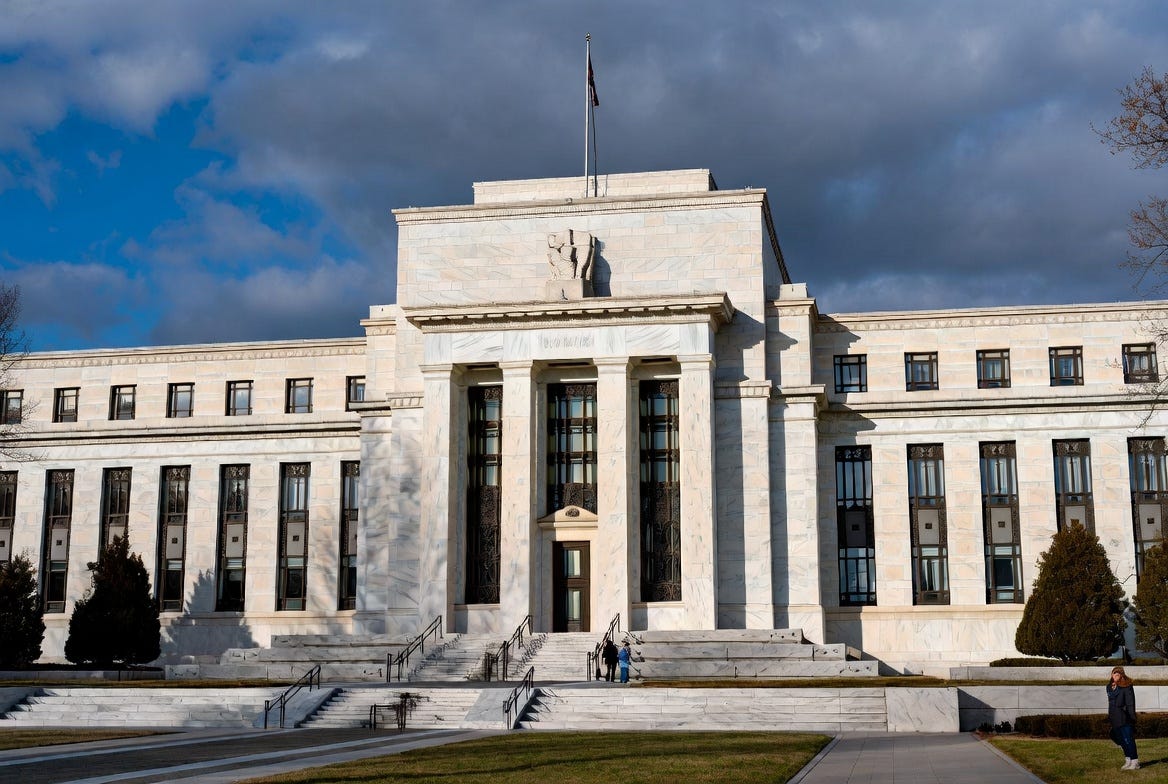
The Federal Reserve, under their former Chairman Jerome Powell, has missed its inflation target for over 5 years.
For your personal wallet, this leadership change is a massive storyline to watch, especially if you are trying to buy a house, carry credit card debt, or finance a car. Warsh is stepping into a deeply complicated economic reality; despite the political pressure for swift cuts, the broader financial markets are currently betting that the Fed will actually keep rates on hold through most of 2026, with an eye toward potentially hiking them in early 2027 to combat stubborn inflation.
Warsh himself is promising a “reform-oriented” central bank that will strip away recent “mission creep”—like past initiatives targeting climate change and social inequality—to focus strictly on price stability and employment. He faces the immediate challenge of tackling inflation, which ran above the Fed’s 2% target for five straight years under his predecessor, Jerome Powell. Powell isn’t leaving the building either; in a historic twist not seen in nearly 80 years, the former chair will stay on as a Fed governor, setting up a fascinating dynamic as Warsh attempts to prove he can successfully tame inflation while simultaneously delivering the lower benchmark rates the White House is demanding.
The Memory Chip Mirage: Wall Street Warns of an AI Boom-and-Bust Trap
The massive artificial intelligence rally has sent memory chip stocks into absolute hyperdrive, but a growing chorus of fund managers is warning investors that a painful reality check might be right around the corner. Massive players like South Korea’s SK Hynix and Samsung have seen their stock prices soar 186% and 114% this year, while U.S.-based Micron and SanDisk have surged 141% and 156%. Tech executives argue that the insatiable demand for high-bandwidth memory has permanently broken the industry’s historic “boom and bust” cycle, but seasoned portfolio managers are skeptical, warning that every time Wall Street declares a cyclical industry has become a permanent goldmine, it’s usually right before everything goes horribly wrong.
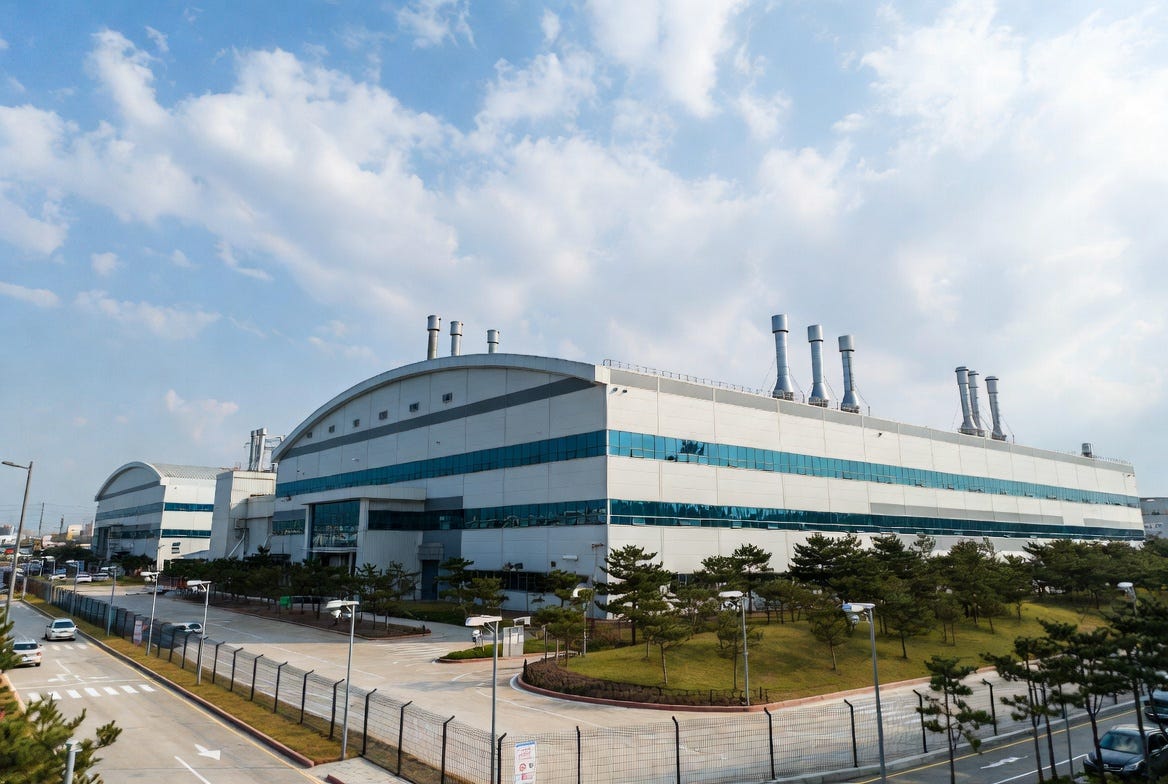
Semiconductor factories are mostly located in South Korea and Taiwan, which poses a great threat due to China’s desire for expansion in the area.
This red-hot sector is priced for absolute perfection, assuming that profit margins stay high, supply remains locked down, and companies won’t over-invest in building new factories. However, tech innovation moves fast, and the demand keeping these stock prices high faces an immediate threat from the software side. Google recently unveiled “TurboQuant,” a new compression method that can run large language models using six times less memory. This single breakthrough sent shockwaves through the market and triggered a sharp drop in chip stocks, proving that the multi-billion-dollar demand from top AI labs can be slashed overnight by simple efficiency gains.
For your portfolio, the takeaway here is a classic lesson in concentration risk and discipline. Memory stocks have experienced extreme “momentum crowding” lately, making them highly vulnerable to a sudden, violent shakeout. This is especially true if you have international exposure; Samsung and SK Hynix now make up over 50% of South Korea’s entire stock index, prompting wealth managers to actively advise clients to take profits and rotate into globally diversified portfolios. While some major banks are still predicting another 20% to 100% growth for these names over the next year, market veterans counter that a leopard rarely changes its spots, and buying into an historically average industry at peak-future prices is an incredibly dangerous gamble for your cash.
Subscribe for free to receive our FREE Retirement Calculator and Guide
Wisdom of the Crowd or Just Noise? The Formula for Prediction Markets
Prediction markets like Kalshi and Polymarket have skyrocketed in popularity since the 2024 elections, but Evercore ISI strategists warn that they aren’t a crystal ball for the future. Led by Julian Emanuel, a May 17 report outlines a strict formula for when these platforms are actually useful for forecasting: the market must have high trading volume, a short time to expiration, and ask simple questions with crystal-clear resolution rules. When a major, chaotic macro event hits, these live markets can react to headlines instantly, often outperforming traditional forecasting tools that are frequently slowed down by expert bias, subjective judgment, or polling errors.
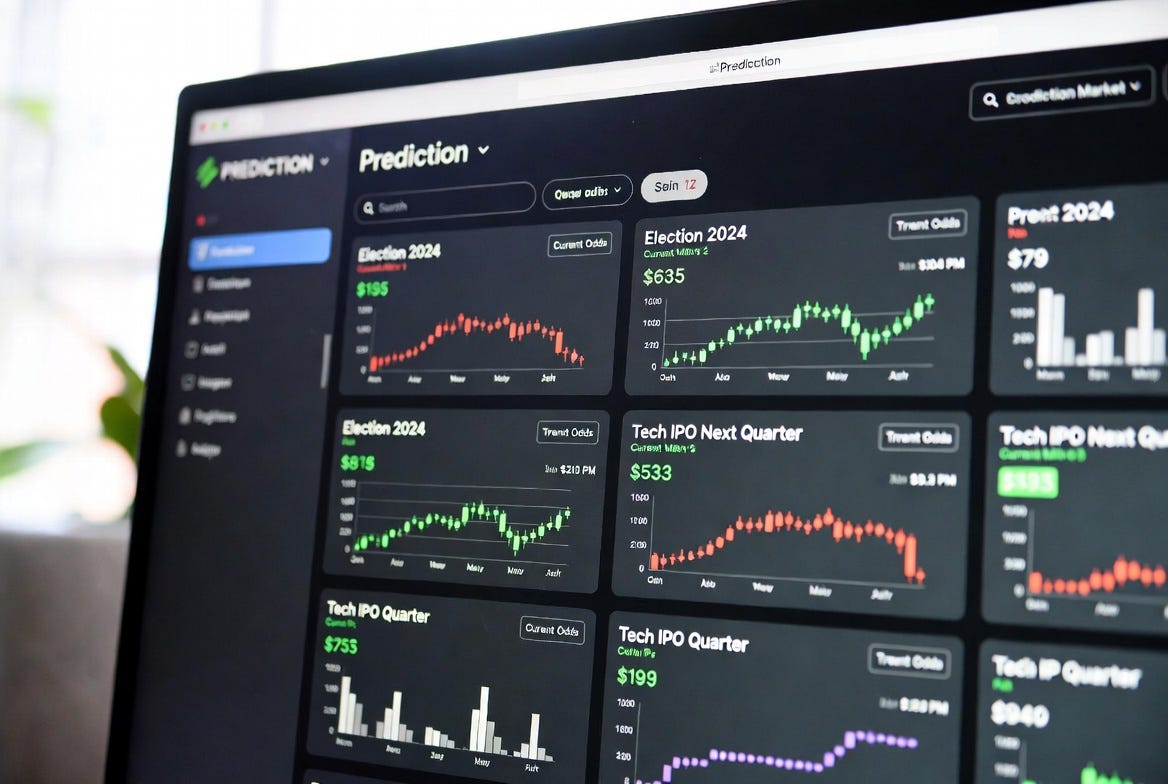
Prediction markets have exploded in popularity in recent years, with millions of dollars trading hands through their online platforms
However, the “so what” for your decision-making is that the vast majority of these markets are far too shallow to trust. Evercore’s data reveals that a staggering 60% of live markets have less than $1,000 in trading volume, and only a tiny 8% ever clear the $1 million mark. When trading volume is that low, a single wealthy trader can easily distort the prices, creating a false impression of what people actually expect to happen. Furthermore, because people trade for all sorts of reasons—ranging from pure entertainment to hedging an investment or just venting their political biases—the resulting prices can easily become “contaminated” by fear rather than factual analysis.
The biggest trap for everyday investors relying on these numbers is contract ambiguity and oversimplification. Vague questions like “will a ceasefire hold?” are dangerous because their final payouts often hinge on hyper-specific contractual language rather than the actual real-world outcome. On the flip side, overly simple binary “yes or no” questions might offer clarity, but they fail to capture the broader nuance that investors actually need to protect their portfolios. At the end of the day, prediction markets don’t discover the future; they merely reveal what a specific, sometimes crowded room of traders believes at that exact second, meaning they should be used as a gauge for current consensus rather than a guaranteed roadmap.
Subscribe for free to receive our FREE Retirement Calculator and Guide
Disclaimer:
The information provided by The Market Dispatch is for educational and informational purposes only and should not be construed as financial, legal, or investment advice.
The Market Dispatch, its authors, and contributors are not financial advisors, brokers, or attorneys. Any opinions, analyses, or projections expressed are solely those of the authors and do not constitute specific recommendations for any individual.
Investing involves risk, including the potential loss of principal and capital. Past performance does not guarantee future results. Before making any financial decisions or investments, you should consult with a qualified financial advisor or other professional who understands your personal circumstances.
By reading this newsletter or using any related materials, you acknowledge and agree that The Market Dispatch and its team will not be held liable for any loss, damage, or expense incurred as a result of reliance on the information provided.
Big fan of your work! I am a new ish writer on Substack, (in economics, finance, geopolitics), and would really appreciate if you subscribed. It would mean the world to learn and grow with a writer I highly respect :)
https://ananyaa2108.substack.com?utm_source=navbar&utm_medium=web
Really interesting. I think the distinction between structural goldmines and cyclical winners is an important one, especially with insane capex dulling the Mag 7s glow - but ultimately it’s the tech companies at the centre, with the hardware companies riding the waves around them, eaves that are very much subject to change depending on the moves made in AI…