

Historical data reveals that despite recent volatility, pre-midterm strength has far outpaced typical election-year baselines—setting up strong historical tailwinds for the 12 months following Election Day. Overseas, the U.S. naval blockade has slashed Iranian crude oil exports by more than 80%, forcing a major shift toward total economic isolation as allied naval escorts restore oil flows through the Strait of Hormuz. Meanwhile, Cleveland Fed President Beth Hammack is pushing for immediate interest rate hikes at Jackson Hole, warning that 3% inflation is straining everyday family budgets and risking permanent economic damage.
Subscribe for free to receive our FREE Retirement Calculator and Guide
Why History Suggests the Stock Market’s Midterm Election Year Jitters Are Far Worse Than Reality
Despite recent market swings and sudden sell-offs, stock performance is tracking far ahead of standard midterm election cycles. Premidterm weakness is usually common because markets dislike political uncertainty, but this year has defied the trend. Even after a sharp dip around August 20, the S&P 500 remained up 11.6% year-to-date—a massive contrast to the average midterm year between 1954 and 2022, which typically saw a 1.3% loss by late August. In fact, today’s market could drop 11% and still sit right at the historical baseline.
For investors watching their retirement portfolios, the historical data offers a reassuring roadmap. Markets typically hit their low point right before Election Day and then embark on a steady 12-month rally once election uncertainty resolves—regardless of which political party wins. Furthermore, history shows that strong returns earlier in a midterm year don’t “borrow” from future performance. Looking back at 1998, which matched today’s strong mid-August momentum, the S&P 500 went on to gain 22% over the next 12 months. Since 1954, the S&P 500 has never posted a loss in the 12 months following a midterm election.
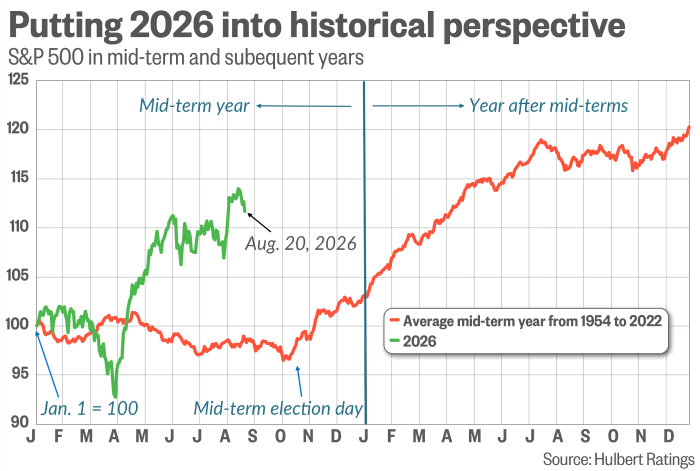
The main takeaway for your wallet is to keep short-term volatility in perspective without overreaching. While historical patterns point to continued tailwinds as pre-election uncertainty clears, getting overly comfortable can tempt investors into taking on excessive risk. Staying grounded, maintaining a long-term view, and resisting panic during sudden market dips remain the smartest moves for your wealth.
Subscribe for free to receive our FREE Retirement Calculator and Guide
U.S. Blockade Slashes Iranian Oil Exports by 80% as Washington Shifts to Full Economic Isolation
The U.S. naval blockade of Iran has severely disrupted the country’s primary revenue engine, driving Iranian crude oil export loadings down more than 80% in August to just 260,000 barrels per day. Reimposed on July 14 after attacks on commercial tankers in the Strait of Hormuz, the blockade marks a major strategic pivot by the Trump administration away from direct military strikes toward total economic isolation. With Treasury Secretary Scott Bessent launching “Operation Economic Outcast” to sever Tehran’s global financial connections, U.S. officials are betting that mounting fiscal pressure will eventually force Iran to concede to Western terms on navigation.
For global energy markets and consumer wallets, the standoff presents a complex mix of supply friction and expanding maritime trade routes. While Iran holds an estimated 20 million barrels of crude afloat waiting to reach China and near-capacity onshore storage, U.S. forces have redirected, disabled, or boarded dozens of non-compliant vessels to enforce the blockade. To counter supply shocks, the U.S. military has helped establish a southern maritime transit corridor along Oman’s coast to escort allied Gulf tankers through the strait. Although independent trade data estimates current Hormuz crude flows at 5 to 6 million barrels per day—down significantly from the pre-war norm of 15 million—analysts note that allied export volumes are steadily recovering.
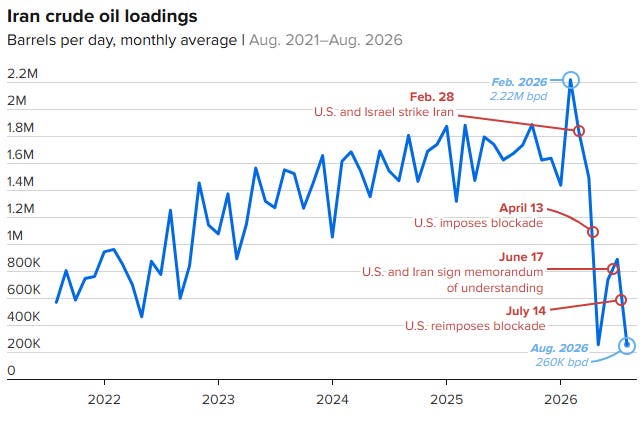
Iran has been struggling to sell oil after the blockade was re-implemented in mid July, creating massive pressure on the country to agree to a peace deal (Chart source: CNBC)
Looking ahead, the success of the campaign hinges on whether Washington’s economic stranglehold can outpace Iran’s retaliatory measures and regional negotiations. Tehran remains defiant, rejecting U.S. demands while seeking a fee-based transit agreement with Oman and launching targeted attacks on commercial shipping. However, as the U.S.-backed southern corridor expands to move oil out of the region, analysts believe Iran is steadily losing its primary leverage over global energy choke points, paving the way for further shifts in global oil supply and pricing dynamics.
Subscribe for free to receive our FREE Retirement Calculator and Guide
Cleveland Fed Leader Pushes for Rate Hikes to Combat Persistent Inflation
Cleveland Federal Reserve President Beth Hammack is taking a hawkish stance on monetary policy, warning that the central bank must act now to raise interest rates and curb stubborn inflation. Speaking from the Fed’s annual symposium in Jackson Hole, Wyoming, Hammack argued that despite recent monthly slowdowns in price increases, inflation remains near a 3% annualized rate—well above the Fed’s 2% target. Having dissented at the July Federal Open Market Committee meeting alongside two colleagues in favor of a quarter-percentage-point rate hike, she cautioned that holding the central bank’s benchmark rate between 3.5% and 3.75% is not restrictive enough given current financial conditions.
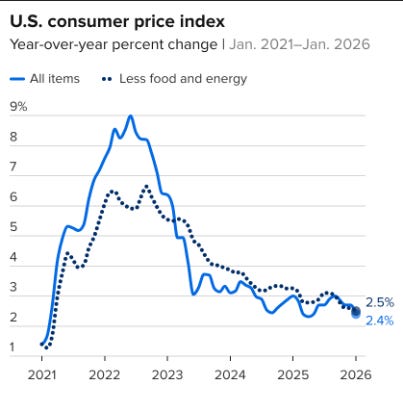
Inflation is much lower now than it was during 2022 (Chart source: CNBC)
For American households and business budgets, Hammack warned that five years of above-target inflation risk embedding an “inflationary mindset” that erodes everyday purchasing power. Recounting visits with workers in Pennsylvania who reported feeling financial despair despite having solid jobs, she emphasized that prolonged high prices make it increasingly difficult for families to afford basic everyday expenses. If the central bank delays tightening policy further, consumers and businesses could face prolonged pain as everyday living costs remain elevated.
Looking ahead, Hammack’s calls for rate hikes face resistance from financial markets, which expect the Fed to hold rates steady through September and October before considering a potential increase in December. While much of this year’s inflation pressure has stemmed from supply chain shocks like the Iran war, tariffs, and booming artificial intelligence demand, Hammack fears these temporary pressures could become permanently baked into the broader economy. Whether the central bank shifts toward rate hikes in late 2026 will directly influence borrowing costs for mortgages, credit cards, and consumer loans.
Subscribe for free to receive our FREE Retirement Calculator and Guide
Follow along on social media for key updates:
Instagram: TheMarketDispatch
Disclaimer:
The information provided by The Market Dispatch is for educational and informational purposes only and should not be construed as financial, legal, or investment advice.
The Market Dispatch, its authors, and contributors are not financial advisors, brokers, or attorneys. Any opinions, analyses, or projections expressed are solely those of the authors and do not constitute specific recommendations for any individual.
Investing involves risk, including the potential loss of principal and capital. Past performance does not guarantee future results. Before making any financial decisions or investments, you should consult with a qualified financial advisor or other professional who understands your personal circumstances.
By reading this newsletter or using any related materials, you acknowledge and agree that The Market Dispatch and its team will not be held liable for any loss, damage, or expense incurred as a result of reliance on the information provided.