

While die-hard soccer fans defy inflation by dropping up to $150,000 on World Cup travel, a sudden cargo ship attack in the Red Sea has put vital global trade lanes back on high alert. Yet behind the scenes, a landmark diplomatic truce has allowed OPEC+ to aggressively flood the market with crude oil, dragging global energy prices down to a multi-month low. In this issue of The Market Dispatch, we break down what this consumer splurge reveals about the economy, the rising friction in maritime shipping, and why the sudden drop at the gas pump might be here to stay.
Subscribe for free to receive our FREE Retirement Calculator and Guide
The Soccer Stimulus: Fans Drop up to $150,000 for World Cup Magic, and They’d Do It Again
The eye-watering cost of attending the World Cup hasn’t done a single thing to cool down the burning passion of international soccer fans. From regular upper-level resale seats listing for around $5,000 to marquee knockout ticket packages hitting a staggering $20,000 on StubHub, fans are opening their wallets wider than ever. When you layer on international airfare, hotels, rental cars, and premium stadium hospitality packages, die-hard spectators are casually spending anywhere from $2,500 to a massive $150,000 to follow the tournament across the United States.

The 2026 World Cup has drawn massive viewership as countries all over the world compete for the ultimate prize
The “so what” for the broader economy is a massive validation of the “experience economy” and a textbook example of long-term consumer demand that is completely immune to price shocks. Rather than pulling back in a tough financial environment, consumers are revealing that they will literally save for four consecutive years or aggressively reallocate family budgets just to participate in a once-in-a-lifetime cultural event. This massive, sticky travel spending is delivering a direct injection of foreign and domestic capital right into the hospitality, transit, and tourism sectors of major host cities like New York, Miami, Dallas, and Atlanta.
What makes this financial frenzy truly unique is the absolute absence of buyer’s remorse among consumers. Whether it’s a couple spending $100,000 strictly on FIFA ticket packages or a single fan dropping $12,000 on high-end hospitality lounges to secure a final sports splurge before a baby arrives, the sentiment across the board is that the “carnival experience” is 100% worth it. For businesses and future planners, this behavior signals a green light for sports tourism; the spending momentum is already rolling forward, with high-net-worth fans openly committing to do it all over again at the next global tournament across Europe and North Africa.
Subscribe for free to receive our FREE Retirement Calculator and Guide
A Choke Point Under Fire: Red Sea Cargo Attack Threatens the Fragile U.S.-Iran Ceasefire
A fresh security crisis is rattling global shipping lanes after a cargo vessel southwest of Yemen’s Al Hudaydah port triggered a distress alert on Sunday, reporting that it was under attack by unknown armed assailants. The United Kingdom Maritime Trade Operations (UKMTO) center confirmed the incident, which occurred just 30 nautical miles off the Yemeni coast, and immediately urged nearby vessels to transit the area with extreme caution. While authorities are still actively investigating the assault, the incident injects sudden volatility into a highly sensitive maritime zone, testing the durability of the fragile, newly signed June 17 memorandum of understanding between the United States and Iran.
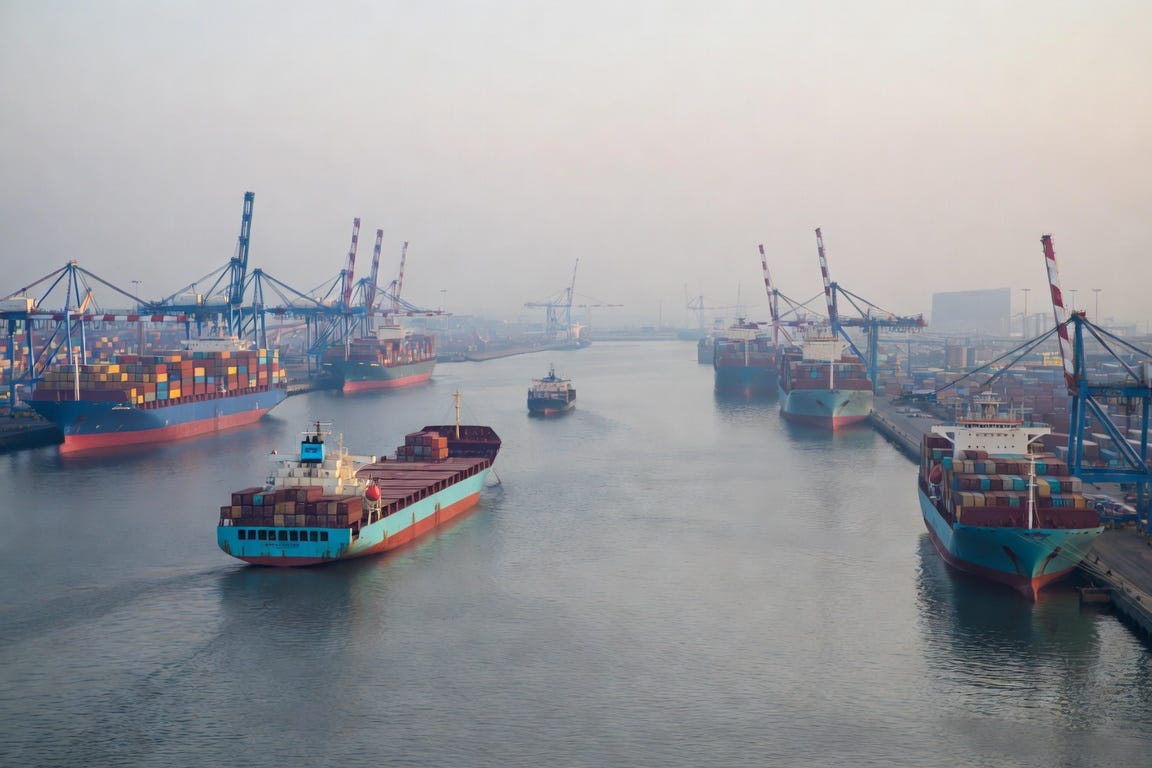
Cargo shipments have been affected by the Iran War, even though most of the media reported only the effect it had on oil and natural gas shipments
This poses a direct threat against the crucial relief valve currently stabilizing world energy markets. When the U.S.-Iran war severely disrupted the Strait of Hormuz earlier this year, Saudi Arabia successfully capped soaring energy costs by rerouting millions of barrels of oil per day through its East-West Pipeline directly into the Red Sea. If the Bab el-Mandeb Strait—the vital southern gateway of the Red Sea—becomes a shooting gallery again, this critical backup supply route to major Asian economies like Japan and South Korea could easily choke, completely reversing the recent 39% plunge in benchmark Brent crude oil prices.
For investors, this headline serves as a sharp reminder that the energy market’s recent peace rally is sitting on a powder keg. Following the June 17 truce, Saudi Arabia’s oil exports through the reopened Strait of Hormuz more than doubled to 34 million barrels in just two weeks as the kingdom rushed to clear a massive wartime logjam of stranded tankers. While Iran-backed Houthi rebels have largely stayed out of the broader U.S.-Iran war, this latest attack proves that maritime transit lines remain highly vulnerable, signaling that the current discount on crude prices could vanish overnight if shippers are forced to price geopolitical risk back into the pump.
Subscribe for free to receive our FREE Retirement Calculator and Guide
OPEC+ Triggers Fresh Production Hikes as Reopened Oil Shipping Lanes Tank Crude Prices
OPEC+ has officially agreed to push global oil supplies even higher, approving a production quota increase of 188,000 barrels per day starting in August. This move by the seven core alliance members follows similar paper-only hikes in June and July that were previously blocked from hitting the physical market due to intense wartime disruptions. With the recent diplomatic truce and a gradual reopening of the critical Strait of Hormuz shipping corridor, major oil-exporting heavyweights like Saudi Arabia, Kuwait, and Iraq are finally positioned to move their stranded crude out of the Middle East and onto the global stage.
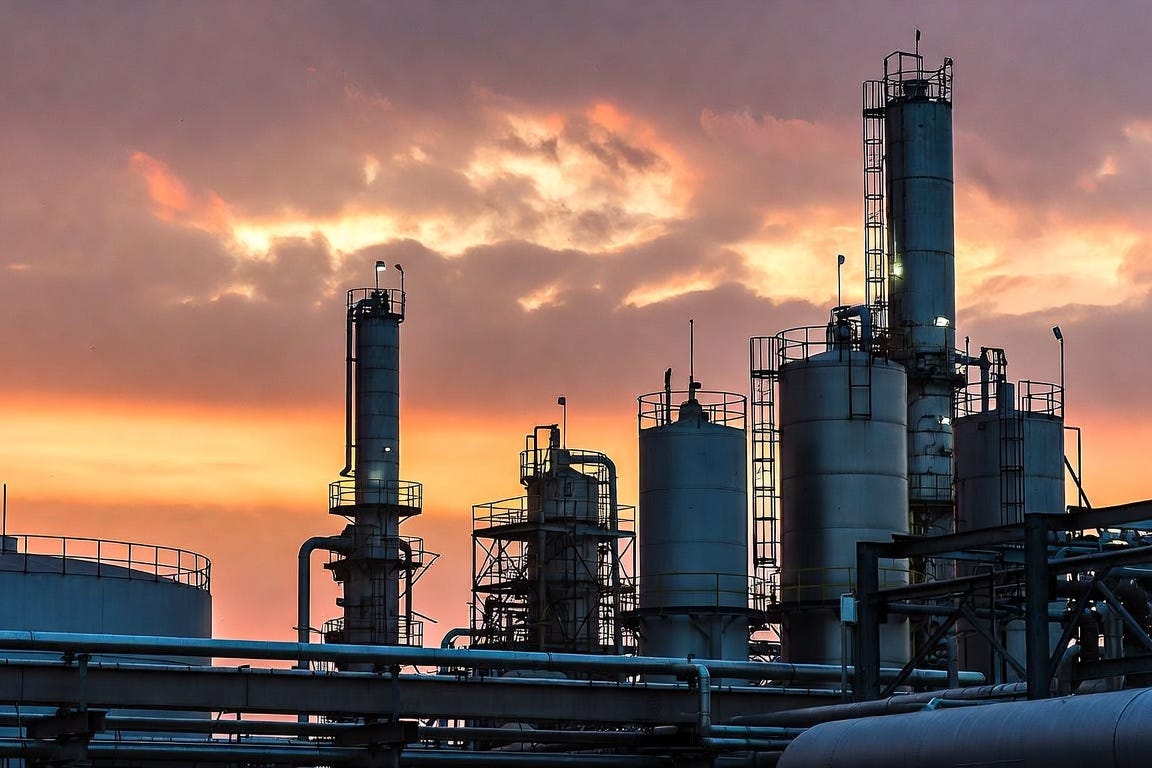
OPEC+ has intensified oil production as international oil shipments resume as the Iran War nears its end
Analysts indicate that this might lead to an immediate, sustained relief at the gas pump as global energy prices plunge back to pre-war baselines. Benchmark Brent crude oil, which shattered household budgets earlier this year when it rocketed past $120 a barrel, has cratered all the way down to near $72 a barrel—effectively erasing the entire inflationary premium triggered when warfare first erupted on February 28. A powerful combination of falling Chinese import demand, surging output from non-Middle Eastern producers, and a record-breaking emergency stockpile release coordinated by the International Energy Agency has completely flipped the market from scarcity to a looming supply glut.
For the broader economic playbook, this production spike marks a dramatic unraveling of the cartel’s historical grip on global pricing. The core seven producers are now just one final September hike away from completely wiping out their massive 2023 supply cuts, rushing to reclaim market share in a rapidly shifting alliance that was deeply fractured by the sudden departure of the United Arab Emirates in April. As long as oil tankers continue to clear the Strait of Hormuz without dynamic military setbacks, consumers can expect the broader economy to absorb a massive, deflationary breathing room heading into the tail end of the summer.
Subscribe for free to receive our FREE Retirement Calculator and Guide
Follow along on social media for key updates:
Instagram: TheMarketDispatch
Disclaimer:
The information provided by The Market Dispatch is for educational and informational purposes only and should not be construed as financial, legal, or investment advice.
The Market Dispatch, its authors, and contributors are not financial advisors, brokers, or attorneys. Any opinions, analyses, or projections expressed are solely those of the authors and do not constitute specific recommendations for any individual.
Investing involves risk, including the potential loss of principal and capital. Past performance does not guarantee future results. Before making any financial decisions or investments, you should consult with a qualified financial advisor or other professional who understands your personal circumstances.
By reading this newsletter or using any related materials, you acknowledge and agree that The Market Dispatch and its team will not be held liable for any loss, damage, or expense incurred as a result of reliance on the information provided.
I read your analysis. It's well-written, has numbers, has rhythm – exactly what you need for a newsletter meant to be read over morning coffee.
And yet, as I read it, I find myself wondering: aren't we all looking in the wrong direction?
Because while you're talking about oil prices dropping to $72 and fans shelling out $150,000 for the World Cup, I'm looking at something else entirely. At Germany, losing hundreds of thousands of jobs. Bosch, cutting 22,000 people. VW, shutting down plants. ThyssenKrupp, putting its steel division up for sale – and finding no buyers. BASF, relocating production to China.
But maybe I'm the one who's wrong. Maybe I'm just too close to the subject. Maybe that's why I wrote "Chronicle of an Announced Decline" – because I'm still trying to figure out if what I'm seeing is real, or if it's just my own fear.
What unsettles me the most is a contradiction I simply can't explain.
Is oil actually cheap at the pump? Theoretically, yes. Brent has dropped below $72 a barrel. OPEC+ is ramping up production. The Strait of Hormuz reopened following the June 17 U.S.-Iran agreement. Saudi Arabia pushed out 34 million barrels in just two weeks.
But the reality at the pump tells a very different story. Gasoline and diesel are selling as if crude were still at $95–100 a barrel. The head of TotalEnergies says Gulf producers are desperate to clear their inventories – offering massive discounts on crude – yet shipping vessels are still hesitating to transit the Strait of Hormuz. Meanwhile, in South Korea, four oil companies were accused of price manipulation during the war. Their employees allegedly wrote in internal chats: "Prospering in wartime. Long live Trump."
I'd bet none of us really knows where the money gets lost along the supply chain. But it's clear that somewhere between cheap crude and the expensive pump, there's a crack. And that crack isn't just technical – it's political, it's speculative, and maybe even deliberate.
And the World Cup? Yes, it's the spectacle that distracts. Fans are spending fortunes – anywhere from $2,500 to $150,000. But beneath the spectacle, President Trump personally called FIFA President Gianni Infantino after American star Folarin Balogun received a red card. He demanded the decision be reviewed. FIFA did exactly as requested – for the first time since 1962, a suspended player was allowed to play. UEFA called the decision "unprecedented, incomprehensible, and unjustified." And Trump posted on Truth Social: "Thank you FIFA for doing the right thing."
I don't know if that's corruption or just public relations. But I do know that while we're watching matches and oil price charts, something else is happening. Something we don't always catch on the first pass.
In ancient Rome, they used to say: "bread and circuses" – panem et circenses. Feed the people and give them a show, so they don't notice the power map shifting underneath them. I'm not saying that's what's happening now. But I can't help wondering if, between the oil drop and the World Cup spectacle, all of us – myself included, and maybe you too – aren't just looking the other way.
The Red Sea is under attack again. A cargo vessel was hit by unknown assailants off the coast of Yemen. And this is happening right while the Persian Gulf war is still smoldering. Maybe this unresolved conflict is the real cause of the instability – and the pump price is just a symptom. But I admit, I don't have all the answers.
Maybe I'm just a writer who sees too many connections where there might be none. Maybe everything is simpler: supply and demand, markets adjusting, normal economic cycles.
But what if it isn't?
That's the only question I have for you – and for myself: What is really happening beneath the surface of these numbers?
I don't pretend to have the answer. Only that it's worth asking.
The useful portfolio read here is the collision of three signals that usually get analyzed separately: discretionary travel demand, maritime chokepoint risk, and oil supply.
The World Cup spending story says some consumers are still willing to absorb high prices for scarce experiences. The Red Sea story says logistics risk can return fast. The OPEC+ story says energy prices can fall even while geopolitical risk stays alive.
That combination makes the summer harder to read than a simple “consumer strong” or “oil down” headline.