

Iran's sweeping demands to reopen the Strait of Hormuz coincide with a severe global refining shortage, decoupling retail gasoline prices from falling crude oil costs and handing U.S. refiners record profits. The increase in gasoline costs is closely watched by economists as this increase makes its way throughout the entire economy. As inflation expectations increase, so does the yield on the 10 Year treasury note, which makes bank raise mortgage rates and, in turn, increases borrowing costs for homebuyers. Meanwhile, the domestic housing market is flashing a clear K-shaped divide: high-end luxury sales are surging on stock market wealth, while starter-home buyers are sidelined by elevated mortgage rates, rising insurance costs, and persistent inventory shortfalls.
Subscribe for free to receive our FREE Retirement Calculator and Guide
Strait Chokehold: Iran Demands Sweeping U.S. Concessions as Maritime Attacks Fracture Energy Talks
The high-stakes standoff in the Strait of Hormuz has taken a sharp turn for the worse as Tehran issued a sweeping list of demands to Washington as a prerequisite for reopening the vital maritime chokepoint. According to Iran’s Supreme National Security Council, any restoration of commercial passage requires the U.S. to lift its naval blockade, cancel sanctions, withdraw all military forces from the region, unfreeze Iranian assets, and pay war reparations. The hardening posture comes immediately after a missile attack targeted an Abu Dhabi National Oil Company (ADNOC) vessel transiting the strait, driving ship traffic through the waterway down by 33% in a single day and reigniting fears over global energy trade security.
For your wallet and the broader economy, this diplomatic impasse prolongs a severe energy supply shock that threatens to feed directly back into domestic inflation and pump prices. Although international oil benchmarks tumbled over 7% across the full week due to earlier hopes of an imminent diplomatic deal, prices ticked back up above $83 a barrel for Brent crude following the fresh maritime strikes and aggressive rhetoric. With the U.S. naval blockade remaining in full effect and Iran advancing a draft legislative plan to ban U.S. and Israeli vessels while charging tolls to other nations, supply chain volatility for crude oil, natural gas, and global commodities is set to persist.
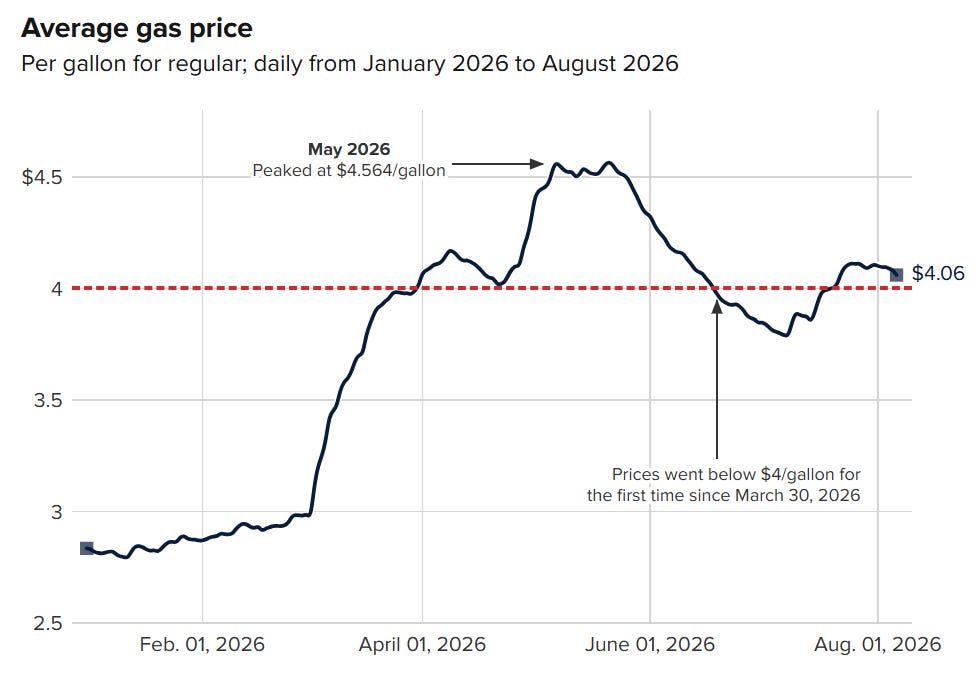
Gas prices have moved sharply up and down this year, being heavily dependent on the events regarding the Iran War (Source: CNBC)
For global markets, the widening rift between Iran’s military actions and its diplomatic tracks signals an unpredictable road ahead for international trade corridors. While technical negotiations between Iran and neighboring Oman regarding a structured transit scheme have entered their final stages, Iranian officials explicitly clarified that these regional navigation talks will not automatically trigger a full reopening of the waterway. With the 60-day negotiation window established under June’s interim deal rapidly closing, market participants are left weighing the threat of a prolonged dual blockade against the uncertain prospect of a formal diplomatic resolution.
K-Shaped Housing Divide: Luxury Sales Surge as Starter-Home Buyers Face Affordability Wall
The divide in the U.S. housing market is widening into a textbook K-shaped recovery, where upper-income buyers thrive while first-time buyers are squeezed out. Sales of starter homes—defined as the lowest-priced third of properties—dropped 5.4% year-over-year in May despite a 4.5% increase in available inventory, pushing the typical starter home value to $202,000. In stark contrast, luxury home sales surged 6.2% over the same period. This split highlights how stock market gains and accumulated wealth continue to empower high-end buyers, while everyday inflation and elevated living costs prevent entry-level buyers from saving adequate down payments.
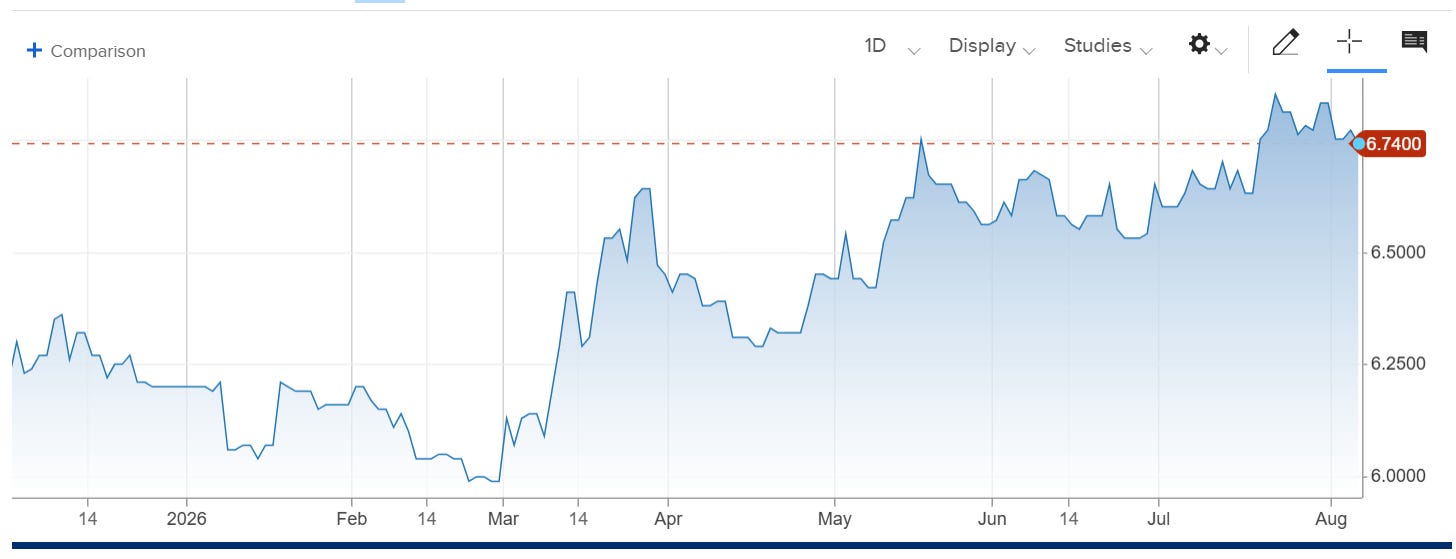
Mortgage rates have consistently gone up this year which, combined with record home prices, has created the “perfect storm” to make housing unaffordable for most
For everyday buyers, stubbornly high mortgage rates and record-high home prices remain the primary barriers to ownership. Driven upward by broader inflationary pressures and geopolitical uncertainty, average 30-year fixed mortgage rates hovered around 6.75%, pushing the national median existing-home price to an all-time high of $440,600 in June. On a typical $202,000 starter home, a 6.75% interest rate results in a monthly principal and interest payment of $1,310—compared to just $852 at a 3% rate. Compounded by sharp increases in property taxes and home insurance, elevated borrowing costs leave starter-home buyers either unable or unwilling to enter the market.
Looking ahead, structural housing shortages mean affordability relief will not arrive overnight. While the newly passed 21st Century ROAD to Housing Act aims to boost construction, expand financing, and curb institutional investor buys, experts note it will take years to bridge an estimated shortage of over 4 million homes. With mortgage rates expected to remain higher for longer, prospective buyers face difficult tradeoffs—either relocating to lower-cost regions with fewer career opportunities or continuing to rent while waiting for structural relief.
Subscribe for free to receive our FREE Retirement Calculator and Guide
Refining Capacity Bottleneck Threatens Record High Fall Gas Prices as Oil Costs Diverge
U.S. motorists could face record-breaking gas prices heading into Labor Day as a severe global refining capacity shortage keeps fuel expensive despite recent drops in raw crude oil prices. While crude prices fell roughly 10% toward $76 a barrel on potential diplomatic talks over the Strait of Hormuz, drivers are still paying around $4.06 per gallon—a 36% surge above levels seen before hostilities began in late February. Industry leaders like ExxonMobil CEO Darren Woods highlight a rare structural “disconnect between crude prices and pump prices,” as the cost of gas is currently being dictated by the scarcity of refining capabilities rather than the raw cost of oil itself.
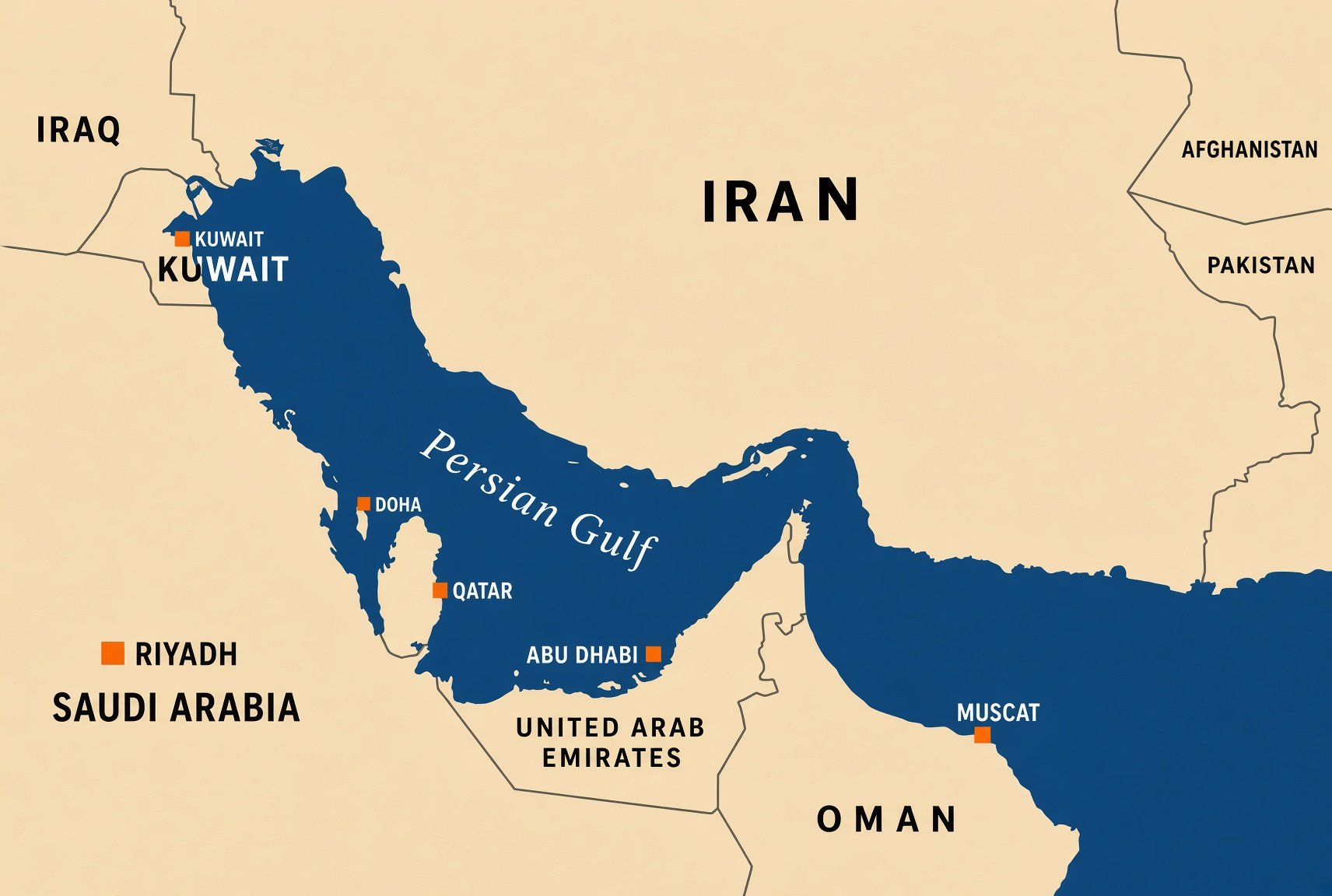
Both UAE and Oman are heavily affected by the closure of the Strait of Hormuz since they both use the straight for commercial navigation
The global crunch stems directly from geopolitical conflict, which has knocked millions of barrels per day of processing capacity offline across key international regions. Drone strikes in Russia have disabled up to 2 million barrels per day of refining infrastructure, while shipping disruptions in the Middle East have trapped roughly 3 million barrels per day of capacity. With additional export halts from China, industry estimates suggest that anywhere from 5 to over 8 million barrels per day of global refining capacity is unavailable. Because replacing damaged processing equipment and restoring supply flows will take significant time, high fuel prices are expected to linger well past the end of the summer driving season.
For domestic refiners, this global supply pinch has translated into extraordinary financial windfalls as they operate near maximum capacity to meet demand. Bumper profit margins—driven by a “crack spread” that surged past $70 per barrel—helped refiners like Valero, Marathon Petroleum, and Phillips 66 report quarterly earnings jumps ranging from 300% to over 400%. U.S. Gulf Coast operators are in an exceptionally strong position, leveraging Venezuelan crude imports and temporary Jones Act waivers to ship gasoline and diesel flexibly across the globe while capturing historical industry margins.
Subscribe for free to receive our FREE Retirement Calculator and Guide
Follow along on social media for key updates:
Instagram: TheMarketDispatch
Disclaimer:
The information provided by The Market Dispatch is for educational and informational purposes only and should not be construed as financial, legal, or investment advice.
The Market Dispatch, its authors, and contributors are not financial advisors, brokers, or attorneys. Any opinions, analyses, or projections expressed are solely those of the authors and do not constitute specific recommendations for any individual.
Investing involves risk, including the potential loss of principal and capital. Past performance does not guarantee future results. Before making any financial decisions or investments, you should consult with a qualified financial advisor or other professional who understands your personal circumstances.
By reading this newsletter or using any related materials, you acknowledge and agree that The Market Dispatch and its team will not be held liable for any loss, damage, or expense incurred as a result of reliance on the information provided.
We sometimes wonder what industry brought up the current US president...
Compare previous Sunday Trade plan vs this week .
August 9th
https://theonenova.substack.com/p/trade-plan-week-of-august-10th?
August 2nd
https://substack.com/@theonenova/note/p-209535840?