

The head of Norway's $2.3 trillion sovereign wealth fund is cautioning investors to prepare for lower equity returns following a semiconductor-led surge. At the same time, the massive capital expansion surrounding artificial intelligence is flipping long-standing tech deflation on its head, threatening to keep U.S. inflation elevated and force the Federal Reserve into higher-for-longer interest rates. To top it off, "The Big Short" investor Michael Burry points to a historic 182-day streak without broad market selling as a major warning sign of hidden risk.
Subscribe for free to receive our FREE Retirement Calculator and Guide
Norway Sovereign Wealth Giant Warns of Slower Market Gains After Record $185 Billion Surge
The head of the world’s largest sovereign wealth fund is urging investors to temper their expectations after a massive first-half rally. Nicolai Tangen, CEO of Norges Bank Investment Management—which oversees Norway’s $2.3 trillion oil fund and owns roughly 1.5% of all listed global companies—warned that the extraordinary returns seen earlier this year are unlikely to continue. Despite navigating severe geopolitical turbulence, trade barriers, and war-related inflationary pressures, the fund posted a record first-half profit near $185 billion, backed by an impressive 12.95% return for the period after rebounding sharply from a rocky first quarter.

Norway’s massive Sovereign Fund (its investment fund owned and operated by the Norwegian Government) owns 1.5% of all stock market listed global companies (Source: CNBC)
For everyday investors, the main takeaway is to guard against complacency while staying disciplined with long-term financial goals. Tangen emphasized that much of the recent market surge was driven by a highly concentrated rally in semiconductor stocks—including major names like Nvidia, TSMC, Intel, ASML, Samsung, and SK Hynix. Rather than chasing these concentrated gains or attempting to market-time potential downturns, he advises everyday market participants to maintain a well-diversified portfolio, stick to a long-term strategy, and accept that future market returns will likely face tougher conditions than the historic gains of recent decades.
Looking ahead, the fund’s cautious stance highlights a broader macroeconomic reality: corporate resilience can only cushion markets for so long amidst ongoing geopolitical and economic uncertainty. Because the $2.3 trillion fund tracks global indexes closely and funds roughly 25% of Norway’s fiscal budget, its leadership expects to participate fully in both market surges and potential downturns without panic-selling or dramatic portfolio shifts. As global equities navigate volatility tied to artificial intelligence spending, central bank policies, and regional conflicts, broad-based diversification and patient capital remain the most effective playbook for retail portfolios.
Subscribe for free to receive our FREE Retirement Calculator and Guide
AI Capital Boom Flips Tech Deflation and Threatens Fed Rate Hikes
A historic multi-hundred-billion-dollar corporate spending spree on artificial intelligence is turning tech into a key driver of U.S. inflation, disrupting a decades-long trend of falling high-tech prices. Historically, declining costs for computers, cellphones, and electronics provided the Federal Reserve with a reliable deflationary tailwind. However, insatiable demand from tech giants like Alphabet, Meta, Amazon, and Microsoft for specialized chips, memory, and data center infrastructure is pushing prices higher across the sector. Economists at CIBC estimate that this massive capital expansion could add up to 0.4 percentage points to U.S. inflation in 2026, threatening to keep inflation near 3% rather than the Fed’s 2% target.
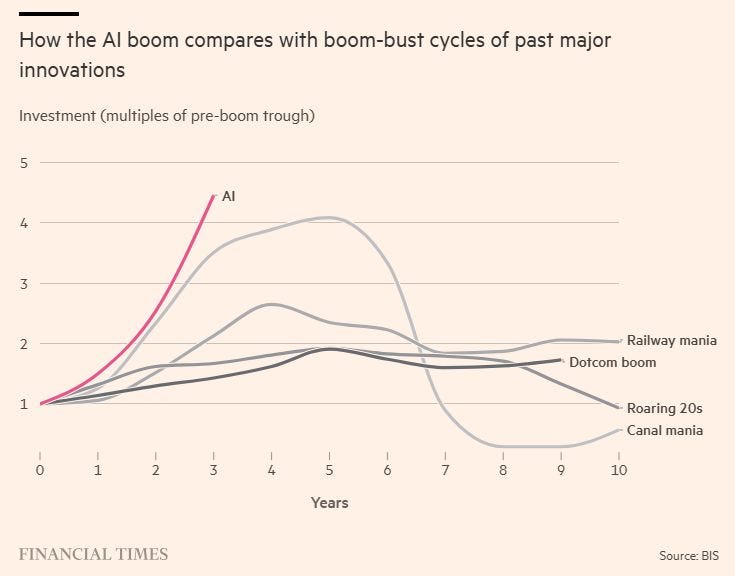
How this AI Buildout boom compares to previous boom-bust cycles (Source: Financial Times)
For consumer budgets and everyday borrowers, the inflationary ripples of AI extend far beyond higher price tags on hardware like Macs and iPads. Massive industrial construction for data centers drove material costs up by 5.3% year-over-year in July, while the stock market gains from the AI boom are fueling a powerful wealth effect that keeps consumer demand and broad prices elevated. If persistent high-tech component shortages and elevated capital spending keep overall inflation sticky, the Fed could be forced to raise interest rates, pushing up borrowing costs for mortgages, credit cards, auto loans, and small business financing.
While economic theory promises that AI will eventually boost workforce productivity and lower production costs, those disinflationary benefits remain years away while the financial bills are arriving immediately. Federal Reserve officials, including New York Fed President John Williams, now cite AI spending as a top inflation risk that could complicate monetary policy long after other temporary shocks subside. Until supply chains adapt to the surge in hardware and construction demand, everyday households will bear the burden of higher borrowing costs and elevated consumer prices.
Subscribe for free to receive our FREE Retirement Calculator and Guide
Michael Burry Warns Historic Stock Market Calm Signals Unprecedented Volatility Ahead
Famed “The Big Short” investor Michael Burry is sounding the alarm on an extraordinary stretch of market tranquility, viewing a record-breaking absence of broad-based selling as a warning sign for investors. Highlighting technical research from BTIG strategist Jonathan Krinsky, Burry noted that the New York Stock Exchange has gone 182 consecutive trading sessions without a single day where 80% or more of volume was on the decline. That marks the longest such streak in at least three decades by nearly 50 trading days, creating a rare period of calm that could eventually give way to a sharp market reversal.
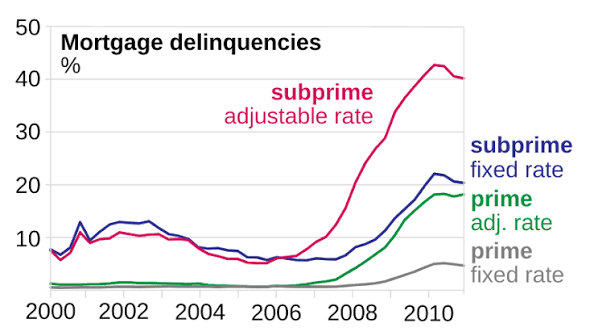
Michael Burry is famously known for calling the housing crisis of 2008, which saw massive losses in real estate assets driven by subprime mortgages (Graph Source: Wikipedia)
For retail investors, Burry’s central message is to avoid dangerous financial risk—specifically margin and borrowing—while waiting for major market cycles to play out. As one of Wall Street’s prominent skeptics of the artificial intelligence boom, Burry has repeatedly questioned the long-term durability of corporate spending and elevated valuations driving current stock levels. He cautions that while broad market shifts can take months or years to unfold, attempting to time these cycles with leveraged capital can quickly wipe out portfolios before the broader market eventually corrects.
Looking ahead, the historic lack of downside volume underscores how unusually concentrated and persistent the current bull market has become. If the trend holds through the end of the year, 2026 would become the first calendar year in over 30 years without at least five heavy-selling days. While revolutionary economic and technological trends will ultimately run their course over time, Burry advises market participants to maintain financial discipline, avoid overextending on debt, and focus on surviving potential market turns intact.
Subscribe for free to receive our FREE Retirement Calculator and Guide
Follow along on social media for key updates:
Instagram: TheMarketDispatch
Disclaimer:
The information provided by The Market Dispatch is for educational and informational purposes only and should not be construed as financial, legal, or investment advice.
The Market Dispatch, its authors, and contributors are not financial advisors, brokers, or attorneys. Any opinions, analyses, or projections expressed are solely those of the authors and do not constitute specific recommendations for any individual.
Investing involves risk, including the potential loss of principal and capital. Past performance does not guarantee future results. Before making any financial decisions or investments, you should consult with a qualified financial advisor or other professional who understands your personal circumstances.
By reading this newsletter or using any related materials, you acknowledge and agree that The Market Dispatch and its team will not be held liable for any loss, damage, or expense incurred as a result of reliance on the information provided.
Spot on and a timely write up. We are going to see depressed returns for some time after this AI euphoria settles. I need to read up on the Canal Mania, that chart trend looks eerily similar to the AI trend.