

While banking leaders emphasize that the recent tech pullback is a healthy step toward broader economic growth, momentum stocks just endured their worst monthly wipeout since the dot-com era as forced hedge fund liquidations rocked the tape. Meanwhile, off the trading floor, world soccer faces an unprecedented crisis after FIFA announced plans to sell a $4.2 billion private equity stake in the World Cup itself.
Subscribe for free to receive our FREE Retirement Calculator and Guide
UBS CEO Sees a Healthy Reset in AI—and a Bigger Wildcard for Your Portfolio
Swiss banking titan UBS just posted a blockbuster second quarter, with pre-tax profits jumping 64% year-over-year to $3.6 billion on the back of a booming investment banking and IPO pipeline. Riding high on this momentum—and launching a fresh $3 billion share buyback—CEO Sergio Ermotti took aim at the recent jitters surrounding tech stocks. Rather than panicking over the pullback in artificial intelligence shares, Ermotti views the cool-down as a routine and necessary breather after months of extreme market concentration.
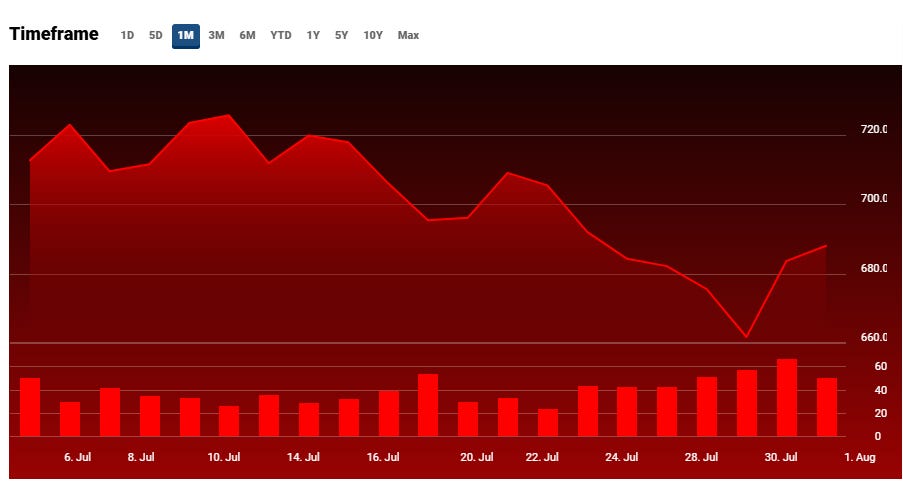
The Nasdaq 100 Index has exhibited a pullback this month, offering investors a better entry price
For individual investors, Ermotti’s perspective is a clear invitation to rebalance rather than retreat. As AI adoption matures, the financial gains are set to spill beyond a handful of mega-cap tech giants and into the broader economy, opening up fresh opportunities across under-allocated sectors. Instead of obsessing over daily swings in tech valuations, everyday market participants should look at this correction as a tactical opening to broaden their exposure while foundational infrastructure continues to build out.
The real wildcard to watch isn’t AI fatigue—it’s geopolitical volatility. Ermotti cautioned that ongoing global tensions present genuine, albeit likely temporary, headwinds that could disrupt broader economic momentum. While the underlying engine of corporate dealmaking and tech expansion remains strong, navigating the months ahead will require balancing long-term growth plays with a watchful eye on global geopolitical pressure points.
Subscribe for free to receive our FREE Retirement Calculator and Guide
Momentum Stocks Suffer Worst Month Since Dot-Com Era as Market Reaches Inflection Point
July wrapped up with a dramatic tug-of-war on Wall Street, capping off a brutal six-week stretch for high-flying momentum stocks with a powerful two-day rally. The turbulence peaked following a forced margin-sale liquidation by the heavily leveraged, AI-focused hedge fund Situational Awareness, which dumped its entire equity portfolio. Despite the late Friday rebound—which helped semiconductor names seal their sharpest two-day comeback since June—the broader damage was severe: the Goldman Sachs High Beta Momentum Basket posted its worst single month since November 2000, pulling the tech-heavy Nasdaq down for its second consecutive monthly loss.
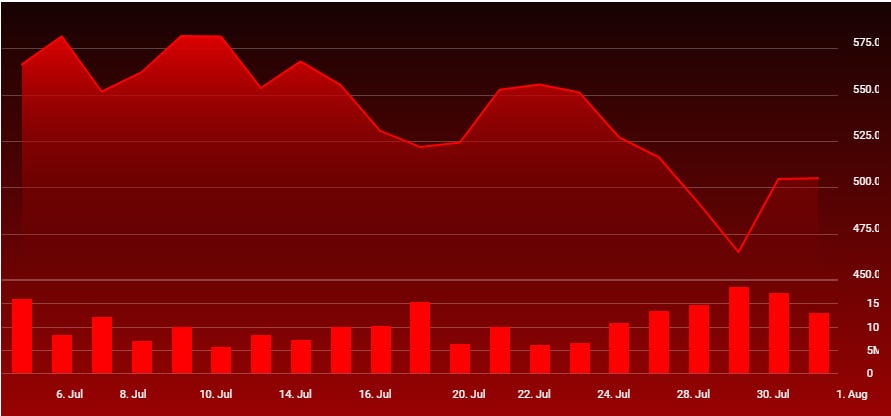
The Semiconductor ETF (SOXX) has suffered heavy losses this month
For everyday investors, the past month was a stark reminder of what happens when market mechanics override underlying business performance. Over the last six weeks, corporate fundamentals took a back seat as capital aggressively rotated out of crowded chip and infrastructure plays and into overlooked corners of the market like software, financials, and real estate. Big tech companies like Alphabet re-confirmed plans to spend hundreds of billions on the ongoing AI buildout, yet those capital infusions weren’t enough to stop momentum names from taking a severe beating as forced liquidations played out across public exchanges.
The silver lining for your portfolio is that the worst of the forced selling may finally be in the rearview mirror. Technical indicators are flashing signs of a broader market stabilization: the S&P 500 reclaimed its 50-day moving average on Friday, and the Wall Street “fear gauge” (the VIX) dropped sharply back below key threshold levels. Furthermore, extreme volatility spikes in momentum baskets have historically signaled major inflection points—such as the bottoms of the 2008 financial crisis and the 2020 selloff—suggesting that while the road ahead will feature heavy rotation, the broader market may be establishing a durable floor.
Subscribe for free to receive our FREE Retirement Calculator and Guide
The Privatization of the Pitch: FIFA’s $20 Billion World Cup Spinout Sparks Global Backlash
World soccer’s governing body has thrown the sports business world into turmoil after announcing plans to form a commercial subsidiary for the World Cup and sell off up to 20% to private investors. Orchestrated by FIFA President Gianni Infantino, the new venture—named FIFA Forward Enterprises (FFE)—is looking to raise up to $4.2 billion from third-party investors, valuing the tournament subsidiary at a massive $20 billion. Managed by J.P. Morgan and backed by venture capital firm Thrive Capital, the deal seeks to monetize the commercial momentum of the sport’s flagship event, even as FIFA insists it will retain majority control.
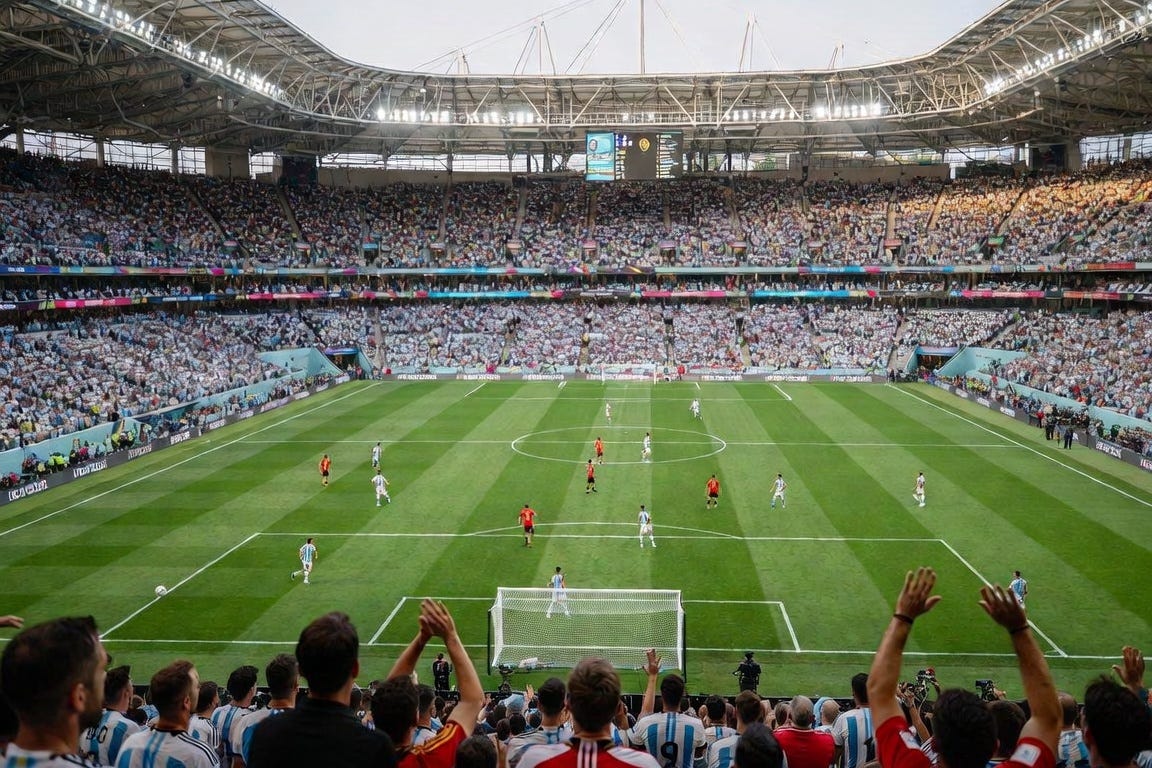
This year’s FIFA World Cup broke attendance records, leading to massive ticket prices
For the broader sports economy, media rights landscape, and international fans, this unprecedented move threatens to fundamentally alter how global sports are governed and commercialized. Critics, led by European governing body UEFA, argue that injecting high-powered private equity into international soccer hands Wall Street investors undue influence over the sport’s calendar, rules, and direction. With UEFA warning that “the soul and governance of football are not assets to trade” and European nations quietly floating the idea of a tournament boycott, the deal opens up a bitter political and financial rift that could fracture soccer’s global supply chain of talent, broadcasting rights, and sponsor dollars.
To push the controversial vote through FIFA’s 211 member nations, Infantino is leveraging direct financial incentives, offering smaller member associations access to up to $20 million each in one-off infrastructure capital payouts. Because FIFA operates as a non-profit where every country gets an equal vote regardless of size, this capital distribution creates a powerful incentive for smaller nations to back the privatization plan. However, with major political figures and European heavyweights pushing back against turning the World Cup into a pure financial product, the proposal faces a high-stakes battle before it can secure the majority approval needed to rewrite the business of global sports.
Follow along on social media for key updates:
Instagram: TheMarketDispatch
Disclaimer:
The information provided by The Market Dispatch is for educational and informational purposes only and should not be construed as financial, legal, or investment advice.
The Market Dispatch, its authors, and contributors are not financial advisors, brokers, or attorneys. Any opinions, analyses, or projections expressed are solely those of the authors and do not constitute specific recommendations for any individual.
Investing involves risk, including the potential loss of principal and capital. Past performance does not guarantee future results. Before making any financial decisions or investments, you should consult with a qualified financial advisor or other professional who understands your personal circumstances.
By reading this newsletter or using any related materials, you acknowledge and agree that The Market Dispatch and its team will not be held liable for any loss, damage, or expense incurred as a result of reliance on the information provided.